

Carried by 25 nurseries
View Availability at NurseryData provided by the participants of the Consortium of California Herbaria
View additional distribution information on the Jepson eflora
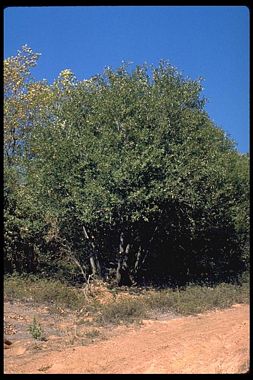
Interior Live Oak (Quercus wislizeni) is a slow-growing, evergreen tree with a distinctive broad crown. The glossy dark green leaves and reddish-brown bark give it a formal look.
In winter and spring, the oak blooms with green and white flowers. The tree's long, narrow acorns serve as a food source for deer.
Interior Live Oak is a resilient and adaptable species. It thrives at elevations ranging from sea level to 5,000 feet, making it an essential part of diverse ecosystems throughout California. Interior Live Oak grows in part to full shade and prefers dry, loamy soil.
Tree
15 - 50 ft Tall
10 - 50 ft Wide
Moderate
Evergreen

Green, Cream
Spring, Winter
Bank stabilization, Deer resistant
Full Sun, Partial Shade
Very Low, Moderate
Max 1x / month once established
Easy
Tolerates cold to 10° F
Fast, Medium, Slow
Tolerant of a variety of soils.
Soil PH: 5.0 - 7.0
For propagating by seed: Sow fresh acorns in fall outdoors or stratify to hold for spring sowing (USDA Forest Service 1974).
Hillsides, canyons and floodplains across most of California in locations where winters are wet but not freezing and summers are hot and dry.
Chaparral, Foothill Woodland
This oak is compatible with a very wide ranges of native trees, shrubs, vines, perennial herbs and annual wildflowers.
Butterflies and moths supported
14 confirmed and 158 likely
Fruit-Tree Leafroller Moth
Archips argyrospila
Andromache Underwing Moth
Catocala andromache
Lady Bird Johnson Wildflower Center - The University of Texas at Austin. (n.d.). Www.wildflower.org. Retrieved October 20, 2023, from https://www.wildflower.org/plants/result.php?id_plant=quwi2