

Carried by 42 nurseries
View Availability at NurseryData provided by the participants of the Consortium of California Herbaria
View additional distribution information on the Jepson eflora
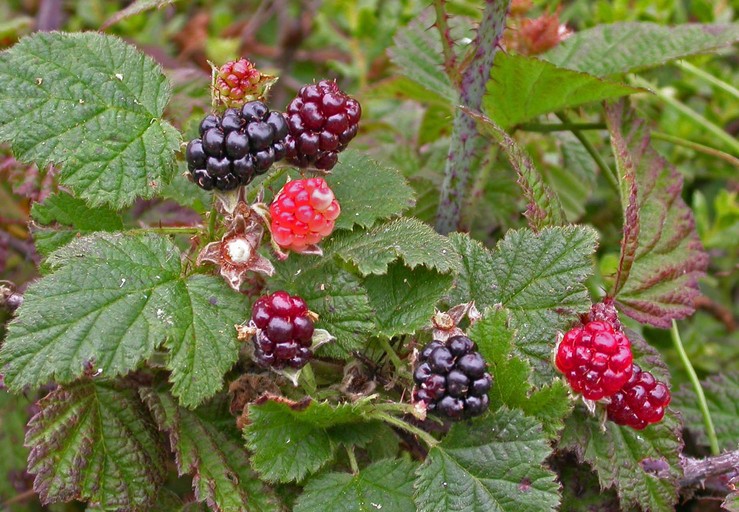
California Blackberry (Rubus ursinus), also known as Pacific Blackberry, is a valuable wildlife plant. The fruit is a favorite of many species of birds and mammals, including black bear. (Ursinus is Latin for bear.) The sweet berries are also edible to humans, although they should be picked with care, as the stems are very prickly. The berries can be eaten raw or cooked. The spreading habit of this shrub provides cover for a wide variety of birds and small mammals. In the wild, deer, rabbits, and other animals eat new shoots and foliage.
California Blackberry is easy to grow in the garden. It tolerates a range of soil types and sun exposures, including shady sites under trees and tall shrubs. It can grow in nutrient-poor soil but does require a moderate to high amount of water to thrive, especially in summer. This shrub can spread up to 6 ft in width, making it a useful groundcover plant. As with harvesting fruit, care should be taken when weeding and pruning. For safety, it's best to plant California Blackberry away from walkways and other high-traffic areas.
Shrub, Vine
2 - 6 ft Tall
6 ft Wide
Upright, Spreading
Fast
Winter Deciduous
Pleasant

White
Spring, Winter
Groundcover, Hedge
Full Sun, Partial Shade, Deep Shade
Low, Moderate
Max 1x / month once established
Easy
Tolerates cold to 0° F
Medium, Slow
Tolerates a variety of soils.
Soil PH: 5.0 - 8.0
Use caution - very prickly. Prune during winter dormancy to shape and to control spread.
From stem cuttings (canes).
1, 2, 4*, 5*, 6*, 7*, 8, 9, 14*, 15*, 16*, 17*, 18, 19*, 20*, 21*, 22*, 23*, 24*
Moist places such as stream banks, canyons, often as part of woodland understory
Chaparral, Coastal Strand, Douglas-Fir Forest, Foothill Woodland, Mixed Evergreen Forest, Valley Grassland, Yellow Pine Forest, Wetland-Riparian
Best used away from foot traffic in locations where its numerous prickles will not be problematic. Use under trees such as Pines (Pinus spp.), Firs (Abies spp.), Oaks (Quercus spp.), Madrone (Arbutus spp.), Cottonwoods (Populus spp.), and Willows (Salix spp.), and with shrubs such as Dogwood (Cornus spp.), wild roses (Rosa spp.), and Currant/Gooseberry (Ribes spp.).
Butterflies and moths supported
4 confirmed and 63 likely
Brittania Moth
Acleris britannia
Orange Tortrix Moth
Argyrotaenia franciscana
Blackberry Skeletonizer
Schreckensteinia festaliella
Rubus ursinus. (n.d.). https://www.fs.usda.gov/database/feis/plants/shrub/ruburs/all.html