

Carried by 0 nurseries
View Availability at NurseryData provided by the participants of the Consortium of California Herbaria
View additional distribution information on the Jepson eflora
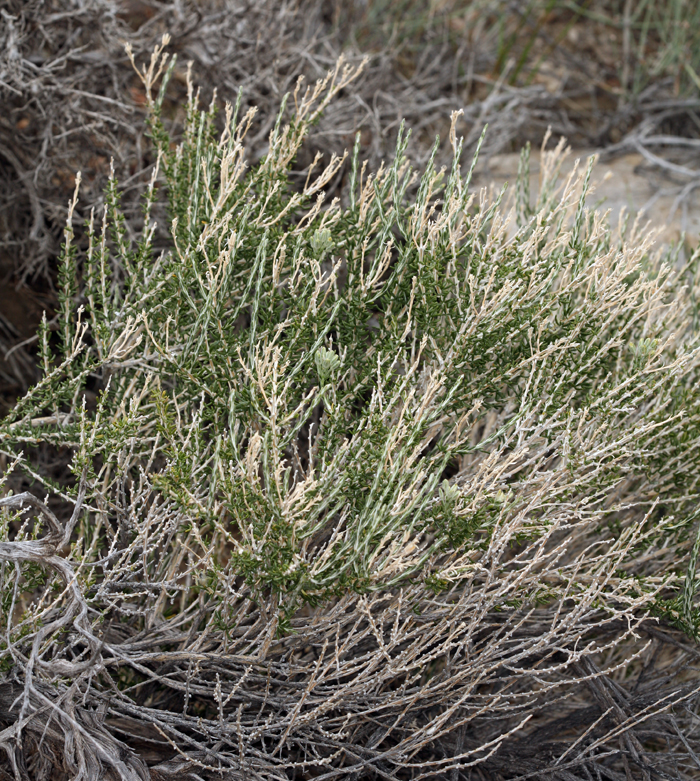
Tetradymia glabrata is a species of flowering plant in the aster family known by the common name littleleaf horsebrush. It is native to the western United States, especially the Great Basin and Mojave Desert. Its habitat includes sagebrush, woodlands, and scrub. It is an erect, bushy shrub growing to a maximum height over one meter, its stems coated unevenly in white woolly fibers with many bare strips. The narrow, pointed leaves are usually no more than a centimeter long and most occur in clusters along the branches. The inflorescence bears up to seven flower heads which are each enveloped in four woolly phyllaries. Each head contains four yellow cream flowers each around a centimeter long. The fruit is a hairy, ribbed achene with a pappus of bristles. This species is the most toxic of the horsebrushes; it and spineless horsebrush (Tetradymia canescens) commonly cause illness and mortality in sheep due to the presence of furanoeremophilanes and other substances. It is especially toxic when consumed along with the black sagebrush (Artemisia nova).
Shrub
1 - 12 ft Tall
Rounded
Slow

Yellow
Summer
Prefers sandy or loamy soils. Does not grow well in clay soils.
Joshua Tree Woodland, Sagebrush Scrub