

Carried by 0 nurseries
View Availability at NurseryData provided by the participants of the Consortium of California Herbaria
View additional distribution information on the Jepson eflora
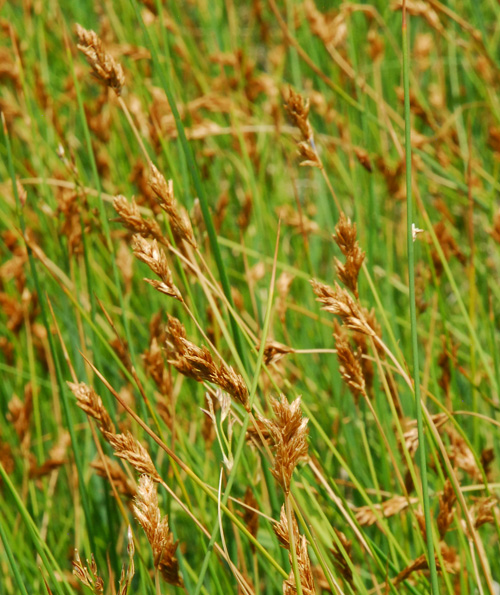
Carex simulata is a species of sedge known by the common name analogue sedge. It is native to the western United States and western Canada, where it grows in many types of wet habitat, from mountain meadows to ditches, often in alkaline conditions. This sedge produces sharply triangular stems up to 80 centimeters tall from a long, coarse, dark brown rhizome. The flower cluster is dense and rounded to open and long, containing several flower spikes. The plant is generally dioecious, with individual plants bearing male or female flowers, but not both. The male, staminate flower cluster is usually longer and more narrow than the oval-shaped female, pistillate spike. Female flowers bear fruits which are coated in dark brown, shiny, pointed perigynia.
Grass
2 - 3 ft Tall
Upright
Slow

Green, Brown
Spring
Containers
Partial Shade
Prefers sandy or loamy soils. Does not grow well in clay soils.
Moist area
Chaparral, Coastal Prairie, Douglas-Fir Forest, Foothill Woodland, Lodgepole Forest, Northern Coastal Scrub, Red Fir Forest, Forest, Subalpine Forest, Valley Grassland, Yellow Pine Forest, Wetland-Riparian
Butterflies and moths supported
0 confirmed and 8 likely
American Ear Moth
Amphipoea americana
Common Ringlet
Coenonympha tullia
Olive Green Cutworm Moth
Dargida procinctus
Dun Skipper
Euphyes vestris