

Carried by 12 nurseries
View Availability at NurseryData provided by the participants of the Consortium of California Herbaria
View additional distribution information on the Jepson eflora
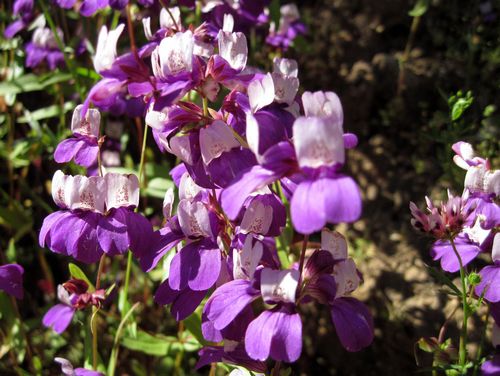
Purple Chinese Houses (Collinsia heterophylla) is a low annual (12 to 18 inches high) that flowers March through June. The flowers are gentle tones of lilac, lavender, purple or blue, usually with a white upper lip and arranged in towers of flower clusters that are thought to resemble a pagoda. They are impressive when massed and fit well with ferns and other wildflowers in chaparral, Coastal Sage Scrub, or Oak Woodland landscaping.
Seed can be sown in fall in an area cleared of weeds. The plant will typically reseed itself each year. It is adaptable to different types of soil but needs a moist place in part shade, part sun. In gardens it needs water weekly.
Hosting caterpillars of butterflies and moths, Purple Chinese Houses will also attract bees and benefit birds.
Annual herb
4 - 19 in Tall
4 in Wide
Upright Columnar
Fast
None

Blue, Lavender, Purple
Winter, Spring
Containers
Partial Shade, Full Sun
Low
Max 2x / month once established
Easy
Tolerates cold to 0° F
Medium
Prefers rich, loamy soil.
Soil PH: 5.0 - 6.0
Because this is an annual, it is best propagated from seed in fall in an area that has already been cleared of weeds. A very light layer of organic mulch will allow seedlings to push through. It will typically reseed itself each year.
5*, 6*, 7, 8, 9, 10, 11, 14, 15*, 16*, 17*, 18, 19, 20, 21, 22*, 23*, 24*
Shady places, meadows, disturbed places, recently burned areas, often beneath oaks or large shrubs, near seeps or ponds
Chaparral, Closed-Cone Coniferous Forest, Foothill Woodland, Lower Montane Coniferous Forest, Perennial Grassland--Remnant Non-desert Grassland
Chinese Houses occurs as an understory with oaks and other trees. Other plants that occur with it include various native ferns, Clarkia spp., Sisyrinchium spp., and other annual wildflowers.
Butterflies and moths supported
3 confirmed and 0 likely
Variable Checkerspot
Euphydryas chalcedona
Edith's Checkerspot
Euphydryas editha
Bilobed Looper Moth
Megalographa biloba