

Carried by 68 nurseries
View Availability at NurseryData provided by the participants of the Consortium of California Herbaria
View additional distribution information on the Jepson eflora
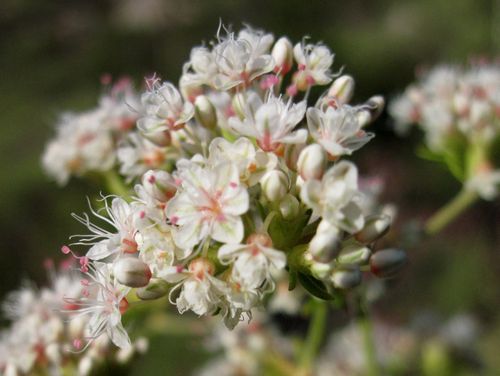
California buckwheat (Eriogonum fasciculatum) is a shrub with a variable appearance, forming a patchy, compact bramble or a spreading bush. The leaves are leathery, woolly on the undersides, and rolled under along the edges. Profuse clusters of pink to white and cream-colored flowers appear as early as March and dry to a pretty red rust color.
California buckwheats are tough and easy to grow, even in very dry conditions. They prefer a well draining sunny site. Once established, no water is needed but the plant can tolerate occasional summer water. As the soil dries, it sheds its dried flowers and a significant portion of its small blade-like leaves, creating natural mulch. Low growing forms make a good spreading ground cover, and taller varieties can even be shaped into hedges.
California Buckwheat is a keystone species for sagebrush scrub ecosystems, and a great choice for wildlife and butterfly gardens. It is attractive to honey bees and a good source of nectar over many months in drier areas.
Shrub, Perennial herb
1 - 7 ft Tall
3 ft Wide
Rounded, Mounding, Spreading
Fast, Slow
Evergreen

Yellow, Cream, Pink, White
Summer, Spring, Fall
Bank stabilization, Deer resistant, Groundcover
Full Sun
Low, Very Low
Max 1x / month once established, Never irrigate once established
Easy
Tolerates cold to 15° F
Fast, Medium, Slow
Prefers loamy soils.
Soil PH: 5.0 - 8.5
Can handle hard pruning; taller varieties can even be shaped into edged/hedged plantings.
For propagating by seed: No treatment.
Dry slopes, often south facing as a common component of Coastal Sage Scrub. Inland it may be found in Valley Grassland. In high desert areas, it occurs in Sagebrush Scrub and Pinyon-Juniper Woodland. It sometimes occurs in low desert areas as part of Creosote Bush Scrub
Chaparral, Coastal Scrub, Creosote Bush Scrub, Desert-Holly Scrub, Joshua Tree Woodland, Pine-Juniper Woodland, Sagebrush, Shadscale Scrub, Southern Oak Woodland
Many companions including Brittlebush (Encelia spp.), Sagebrush (Artemisia spp.), Sage (Salvia spp.), Manzanita (Arctostaphylos spp.), Ceanothus species, Yucca species, Dudleya species, and cactus species
Butterflies and moths supported
16 confirmed and 36 likely
Mormon Metalmark
Apodemia mormo
Bramble Hairstreak
Callophrys dumetorum
Thorne's Hairstreak
Callophrys loki