

Carried by 27 nurseries
View Availability at NurseryData provided by the participants of the Consortium of California Herbaria
View additional distribution information on the Jepson eflora
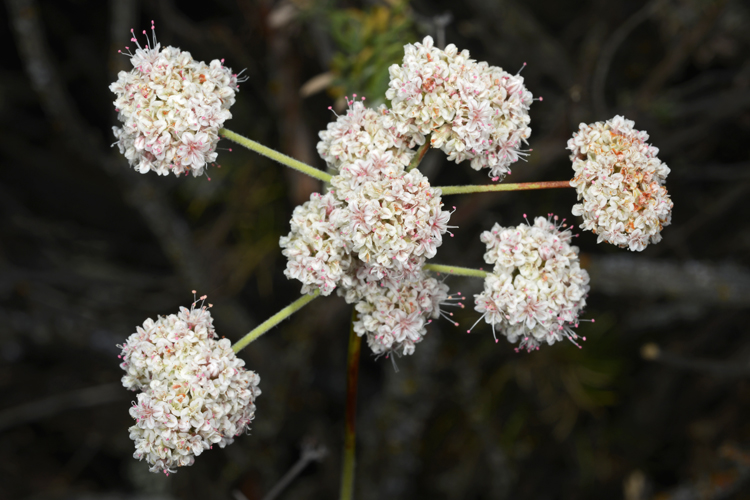
Leafy California Buckwheat, (Eriogonum fasciculatum var. foliolosum), is one of the four recognized varieties of this widespread species, and the one most often seen in populated areas of southern California. However, it is fairly common throughout central and southern California along the coast and on western side of the peninsular range, where it grows on dry slopes, washes and canyons, at elevations from sea level to 5,200 feet.
This plant is tough and easy to grow, even in very dry conditions. Plant in a well draining sunny site. It shouldn't need supplemental water after established, but it will tolerate occasional summer water better than most extremely drought tolerant California natives. Form is is variable, ranging from more often open and upright in the foothills, to often dense and mounding closer to the coast. As the plant ages, it often develops a beautiful ropy red, brown and gray ropy woody trunk and interesting twisting structure. Produces profuse pink to white and cream-colored flowers as early as March that dry to a pretty red rust color as the soil dries. It sheds its dried flowers and significant portion of its small blade-like leaves each dry season, and is an important plant for creating natural mulch. California Buckwheats are a keystone species for sagebrush scrub ecosystems, and a great choice for wildlife and butterfly gardens.
For further detail please refer to the listing for the main species, Eriogonum fasciculatum.
Shrub
3 - 5 ft Tall
3 - 5 ft Wide
Mounding, Rounded, Upright
Fast
Evergreen, Summer Deciduous, Summer Semi-deciduous
Pleasant

Cream, Pink, White, Red
Summer
Groundcover, Bank stabilization, Deer resistant
Low, Very Low
Max 1x / month once established
Easy
Tolerates cold to 15° F
Fast, Medium, Slow
Adaptable.
Soil PH: 5 - 8
Can handle hard pruning. If desired, prune back dead branches at the beginning of the dry season. This plant will often go completely summer deciduous if drought stressed, so avoid cutting back branches that appear dead during the summer. They'll often spring back to life with the start of the rains.
Reseeds fairly easily when sited properly. For propagating by seed: No treatment.
5, 7*, 14*, 15*, 16*, 17*, 18*, 19*, 20*, 21*, 22*, 23*, 24*
Dry slopes, often south facing as a common component of Coastal Sage Scrub. Inland it may be found in Valley Grassland.
Chaparral, Coastal Sage Scrub
Many companions including Brittlebush (Encelia spp.), Sagebrush (Artemisia spp.), Sage (Salvia spp.), Manzanita (Arctostaphylos spp.), Ceanothus species, Yucca species, Dudleya species, cactus species, Rhamnus species, and Rhus species
Butterflies and moths supported
0 confirmed and 48 likely
Sonoran Metalmark
Apodemia mejicanus
Mormon Metalmark
Apodemia mormo
Behr's Metalmark
Apodemia virgulti
Orange Tortrix Moth
Argyrotaenia franciscana