

Carried by 0 nurseries
View Availability at NurseryData provided by the participants of the Consortium of California Herbaria
View additional distribution information on the Jepson eflora
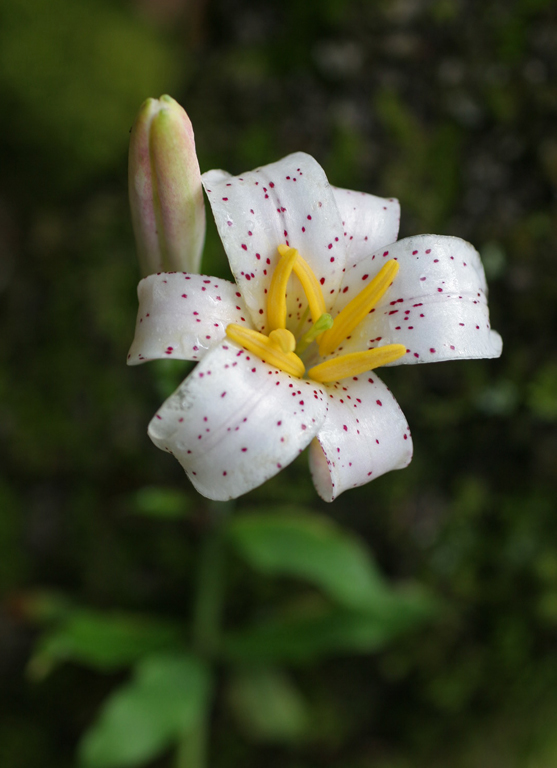
Lilium rubescens is an uncommon species of lily known by the common names lily and chaparral lily. It is endemic to California, where it is known from the Coast Ranges from Del Norte to Santa Cruz Counties. As its names suggest, it is a member of the flora in forest understory and chaparral habitat types. This is a perennial herb growing a waxy, erect stem up to two meters in height. It originates from a scaly, oval-shaped bulb up to about 9 centimeters long. The oval leaves are located in several whorls about the stem, each up to 13 centimeters in length with wavy edges. The flower cluster bears up to 40 erect lily flowers. The fragrant flower is trumpet-shaped with 6 petals up to 7 centimeters long and somewhat recurved or curled back. The petals are white to pale purple or pinkish on the inside, darker on the outside, and freckled with reddish spotting. There are 6 stamens with yellowish anthers and a pistil which may be 4 centimeters in length. The flowers are probably pollinated by bees and the pale swallowtail (Papilio eurymedon). This plant is threatened by a number of factors, including development, logging, non-native species, road maintenance, and horticultural collecting of the bulbs and flowers.
Perennial herb, Geophyte
4 - 7 ft Tall

Pink, White
Summer, Spring
Full Sun, Partial Shade, Deep Shade
Moderate
For propagating by seed: Sow outdoors in summer for germination the following spring, or 3-6 mos. warm then 2-3 mos. cold stratification. For forcing slightly green or fresh seeds: 6-8 wks. warm (70°F) stratification or until the majority of seeds have formed bulblets; then 4-6 wks. cold (about 35°FJ stratification; sow, and at 55 to 60°F leaves should be produced in 4-6 wks. (De Graaff 1951).
7, 14, 15, 16, 17
Dry open places
Chaparral, Red Fir Forest, Yellow Pine Forest
Butterflies and moths supported
0 confirmed and 2 likely
Reaper Dart
Euxoa messoria
Virginian Tiger Moth
Spilosoma virginica