

Carried by 5 nurseries
View Availability at NurseryData provided by the participants of the Consortium of California Herbaria
View additional distribution information on the Jepson eflora
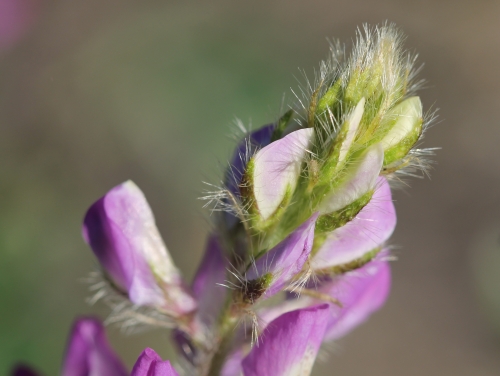
Lupinus hirsutissimus is a species in the Fabaceae (Legume) family known by the common name stinging lupine. It is native to the coastal mountains of Baja California and California as far north as the San Francisco Bay Area, where it grows on dry mountain slopes, including areas that have recently burned. It is an erect annual herb growing 20 centimeters to one meter tall; it may exceed one meter in habitat recovering from wildfire. The stem and herbage are coated in long, stiff hairs that sting skin when touched. Each palmate leaf is made up of 5 to 8 leaflets up to 5 centimeters long and 1 or 2 wide. The flower cluster bears several flowers generally not arranged in whorls. Each flower is between 1 and 2 centimeters long and purple to dark pink in color with a yellowish to pinkish spot on its banner. The fruit is a hairy legume pod up to 4 centimeters long.
Annual herb
8 - 40 in Tall
1 ft Wide

Pink, Purple
Winter, Spring
Full Sun
Moderate
Max 1x / month once established
Fast
Tolerates a variety of soils as long as adequate drainage is provided.
For propagating by seed: Fresh seeds need no treatment. Stored seeds scarification or hot water; No treatment may give fair germination.
Openings in chaparral or coastal sage scrub, dry rocky slopes or flats, recently burned areas
Chaparral, Coastal Sage Scrub
Works well most chaparral plants as well as numerous annuals and herbaceous perennials
Butterflies and moths supported
1 confirmed and 44 likely
Arrowhead Blue
Glaucopsyche piasus
Painted Tiger Moth
Arachnis picta
Oso Flaco Flightless Moth
Areniscythris brachypteris