

Carried by 7 nurseries
View Availability at NurseryData provided by the participants of the Consortium of California Herbaria
View additional distribution information on the Jepson eflora
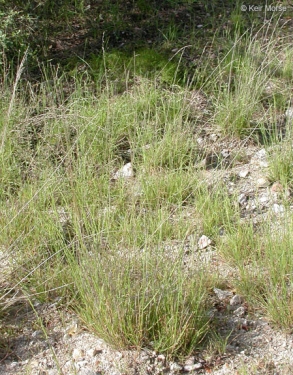
Poa secunda (variously known by the common names of Sandberg bluegrass, alkali bluegrass, big bluegrass, Canby's bluegrass, Nevada bluegrass, one-sided bluegrass, Pacific bluegrass, pine blugrass, slender bluegrass, wild bluegrass, and curly bluegrass. ) is a widespread species of grass native to North and South America. It is highly resistant to drought conditions, and provides excellent fodder; and has also been used in controlling soil erosion, and as revegetator, often after forest fires. Cultivars include 'Canbar', 'Service', 'Sherman', and 'Supernova'. Historically, indigenous Americans, such as the Gosiute of Utah, have used P. secunda for food. It was originally described botanically in 1830 by Jan Svatopluk Presl, from a holotype collected from Chile by Thaddäus Haenke in 1790.
Grass
1 - 3 ft Tall
Upright
Fast

Brown, Cream, Green, Lavender, White
Spring, Summer
Low
Moderate
Fast, Medium, Slow
Prefers sandy or loamy soils. Does not grow well in clay soils.
Butterflies and moths supported
0 confirmed and 20 likely
Common Roadside-Skipper
Amblyscirtes vialis
Green Cutworm Moth
Anicla infecta
Glassy Borer
Apamea devastator
Snowy-veined Apamea Moth
Apamea niveivenosa