

Carried by 3 nurseries
View Availability at NurseryData provided by the participants of the Consortium of California Herbaria
View additional distribution information on the Jepson eflora
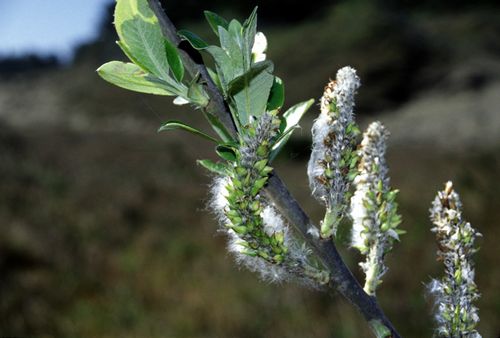
Salix hookeriana is a species of willow known by the common names dune willow, coastal willow, and Hooker's willow. The plant is native to the west coast of North America from Alaska to northern California, where it grows in coastal habitat such as beaches, marshes, floodplains, and canyons. S. hookeriana is a shrub or tree growing up to 8 m (26 ft) tall, sometimes forming bushy colonial thickets. The leaves are up to 11 cm long, generally oval in shape, wavy along the edges, and hairy to woolly in texture with shiny upper surfaces. The inflorescence is a catkin of flowers up to 9 cm long, with the female catkins growing longer as the fruits develop. This willow may hybridize with similar species. The Latin specific epithet hookeriana refers to Sir Joseph D. Hooker. The plant is native to the west coast of North America from Alaska to northern California, where it grows in coastal habitat such as beaches, marshes, floodplains, and canyons.
Tree, Shrub
26 - 33 ft Tall
Upright
Moderate
Winter Deciduous

Yellow, Cream
Spring
Full Sun
High
Adaptable, tolerant of sand, loam and clay.
For propagating by seed: No treatment. Use fresh seeds (usually only viable a few days). Seeds should not be covered or pressed into a medium. Seedbed should be kept saturated for the first month. Easily propogated from cuttings.
4*, 5*, 6, 7, 14*, 15*, 16*, 17*, 19, 20, 21, 22*, 23*, 24*
Dunes, floodplains, meadows
Coastal Strand, Mixed Evergreen Forest, Forest, Wetland-Riparian
Butterflies and moths supported
1 confirmed and 147 likely
Western Tiger Swallowtail
Papilio rutulus
Luteus Dart Moth
Abagrotis trigona
Sallow Button
Acleris hastiana