

Carried by 12 nurseries
View Availability at NurseryData provided by the participants of the Consortium of California Herbaria
View additional distribution information on the Jepson eflora
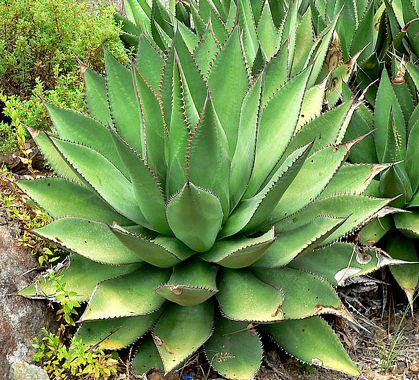
Coastal agave (Agave shawii), also called Shaw's agave, is a dramatic and distinctive succulent native to coastal Southern California. Its dark green leaves are accented with red spines and grow in a tight rosette shape. Individual plants grow to a large size and produce clusters of smaller offshoots called pups. Coastal agave plants grow for many years before producing clusters of yellow flowers on tall stalks that can reach over 10 ft in height. After flowering, an individual rosette dies, but the pups continue to grow.
Coastal agave attracts insects, hummingbirds and bats during its long fall to spring blooming season. It is a low water plant that does not need supplemental irrigation once established. Plant in full sun in rocky, well draining soil. Coastal agave is a bold statement plant in the garden. Pruning is not normally needed, and gardeners should use caution near the plant as the spines are sharp.
Shrub, Succulent
7 - 13 ft Tall
3 ft Wide
Fountain, Spreading
Slow
Evergreen

Yellow, Red
Winter, Spring, Summer, Fall
Containers
Full Sun
Very Low
Never irrigate once established
Moderate
Tolerates cold to 25° F
Fast
Often rocky and low in organic material.
Soil PH: 6.0 - 8.0
Prune only when necessary, and use extreme caution. Avoid all skin contact with the sap. Handle leaves with care - spines are very sharp.
May be propagated from offsets, but extreme caution is needed due to the dangerous spines. For propagating by seed: No treatment.
Bluffs and slopes or rocky mesas; produces many offsets and tends to spread laterally; can form large, impenetrable patches
Coastal Scrub, Maritime Desert Scrub, Southern Coastal Scrub
California Encelia, Bushrue, Chamise (Adenostoma fasciculatum var. fasciculatum), Cliff Spurge (Euphorbia misera), Box Thorn, San Diego Bursage (Ambrosia chenopodiifolia), Jojoba (Simmondsia chinensis), Sea Dahlia (Leptosyne maritima), and various Cacti
Butterflies and moths supported
1 confirmed and 1 likely
California Giant-Skipper
Agathymus stephensi