

Carried by 4 nurseries
View Availability at NurseryData provided by the participants of the Consortium of California Herbaria
View additional distribution information on the Jepson eflora
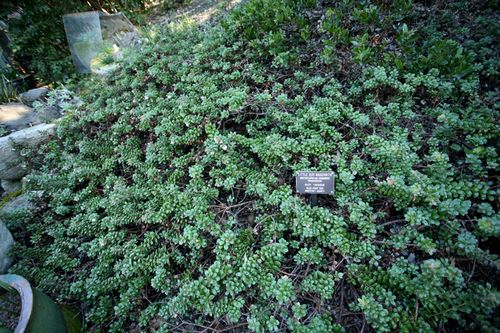
A species of manzanita known by the common name Little Sur manzanita. This shrub is endemic to California where it grows on the coastal bluffs of Monterey County. This is a petite, low-lying manzanita which forms mounds and patchy mats in sandy soil. The leathery leaves are small and rounded to oval, dark green and shiny when mature and red-edged when new. The flower clusters are dense with flowers, which are small, urn-shaped to rounded, and waxy white to very pale pink. The fruit is a shiny, reddish-brown drupe between one half and one centimeter wide.
Little Sur Manzanita prefers sun with a little afternoon shade. It likes sandy soils and beach sand, and will tolerate clay and adobe. It is great for a coastal garden, but doesn't do well with direct salt spray. There are a number of available cultivars including 'Carmel Sur', 'Danville', and 'Indian Hill'.
Shrub
3 - 48 in Tall
3 - 12 ft Wide
Spreading
Fast
Evergreen
Slight

Pink, White, Red
Winter, Spring
Bank stabilization, Deer resistant, Groundcover, Lawn alternative
Partial Shade, Full Sun
Very Low
Max 2x / month once established
Easy
Tolerates cold to 10° F
Fast, Medium, Slow
Normally prefers sandy soil but tolerates clay.
Soil PH: 5.0 - 7.5
Remove dead branches, but otherwise avoid unnecessary pruning.
Propagation by seed is possible, but can be difficult and scarification followed by stratification can improve germination rates. You may also propagate this plant by softwood cuttings.
The natural setting of this plant in the wild is sandy coastal bluffs and back dunes along a very small portion of Monterey County where it is a component of northern coastal scrub and chaparral
Chaparral, Northern Coastal Scrub, Redwood Forest
Coyote Brush (Baccharis pilularis), Ceanothus species, Seaside Daisy (Erigeron glaucus), Cliff Buckwheat (Eriogonum parvifolium), Iris douglasiana, and native ferns
Butterflies and moths supported
0 confirmed and 28 likely
Miranda Underwing
Amphipyra pyramidoides
Orange Tortrix Moth
Argyrotaenia franciscana
The Brown Elfin
Callophrys augustinus