

Carried by 3 nurseries
View Availability at NurseryData provided by the participants of the Consortium of California Herbaria
View additional distribution information on the Jepson eflora
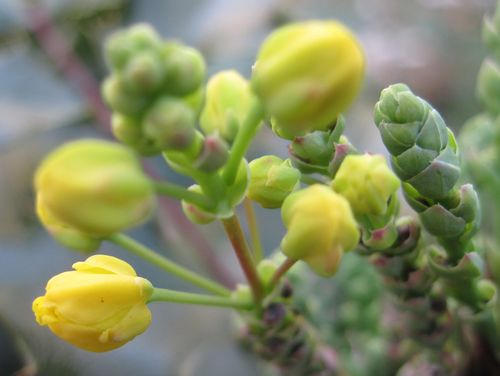
The shrub California barberry (Berberis pinnata) was formerly known as Mahonia pinnata, and some sources still refer to it that way. The genus Mahonia is sometimes considered to be part of Berberis. Other common names for this species are wavyleaf barberry and shinyleaf mahonia. It is a dark green bush which resembles holly with its serrated leaves but bears round purple fruits that look like small grapes. This species is quite similar to the Oregon-grape (Mahonia aquifolium), and is sometimes called the California Oregon-grape. The plant is found along the coast from Oregon to Baja on coastal mountain slopes, most often as part of a woodland plant community. Its fruits are not true grapes, but they are edible, if a bit sour and packed with seeds. They have also been used to produce purple dye. Medicinal uses of the plant include an edible bark preparation as treatment for fever, rheumatism, and dysentery.
Shrub
3 - 7 ft Tall
5 ft Wide
Upright Columnar
Slow
Evergreen

Yellow
Winter, Spring
Bank stabilization, Hedge
Deep Shade, Full Sun, Partial Shade
Low
Max 3x / month once established
Moderate
Tolerates cold to 10° F
Medium
Tolerates clay but performs best in deep, rich woodland soil.
Tolerates serpentine soil..
Soil PH: 5.0 - 7.0
For propagating by seed: 3 mos. stratification.
Rocky openings in evergreen forest, chaparral or oak woodland below 4, 000 ft.
Closed-cone Pine Forest, Douglas-Fir Forest, Mixed Evergreen Forest, Forest
Wild Ginger (Asarum caudatum), Ceanothus species, Pacific Bleeding Heart (Dicentra formosa), California Coffeeberry (Frangula californica), Alumroot (Heuchera micrantha), Oceanspray (Holodiscus discolor), Tanoak (Notholithocarpus densiflorus), Pines (Pinus spp.), Oaks (Quercus spp.), Gooseberries (Ribes spp.), Fringecups (Tellima grandiflora), and Huckleberry (Vaccinum species).
Butterflies and moths supported
1 confirmed and 4 likely
Orange Tortrix Moth
Argyrotaenia franciscana
Barberry Geometer
Coryphista meadii
Fall Webworm
Hyphantria cunea