

Carried by 41 nurseries
View Availability at NurseryData provided by the participants of the Consortium of California Herbaria
View additional distribution information on the Jepson eflora
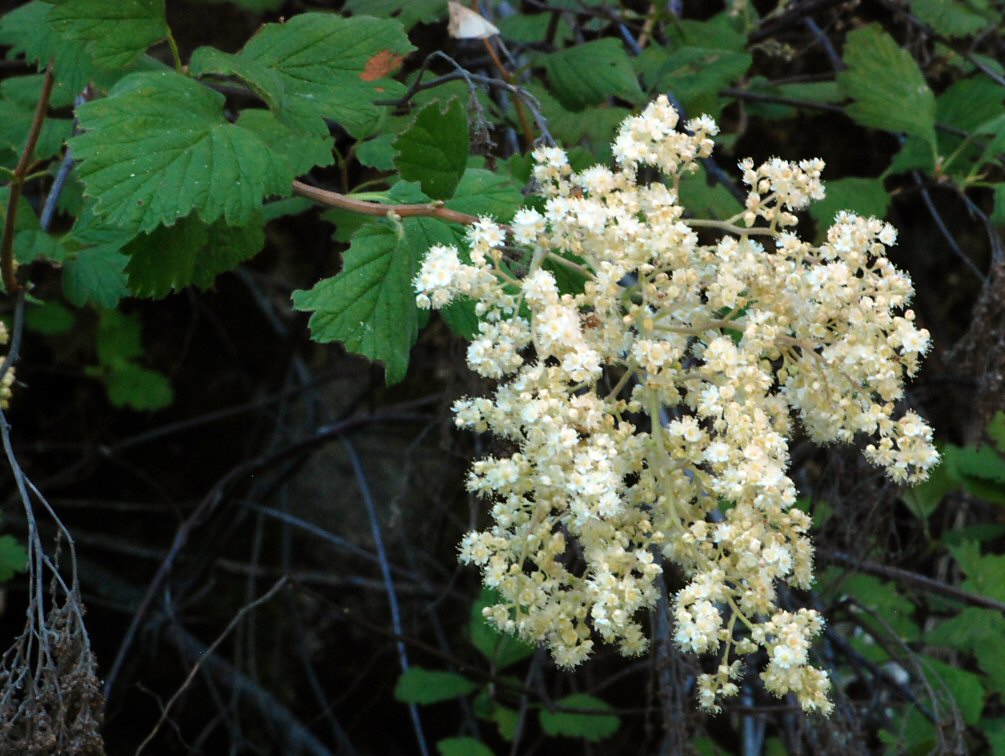
Cream Bush (also called Ocean Spray) is famous for its cascading clusters of fragrant, creamy white flowers. These lovely blooms attract hummingbirds, bees, and butterflies. After blooming, the seeds provide food for birds, and the plant itself provides shelter for birds and small animals.
Cream Bush is an attractive deciduous shrub, commonly found in forest and woodland environments. In the garden, it does well in shade or part shade and adapts to a variety of soil types. Water needs are moderate, and it can enjoy supplemental irrigation in drier areas.
Shrub
3 - 16 ft Tall
10 - 15 ft Wide
Upright, Weeping
Moderate
Summer Semi-deciduous, Winter Deciduous
Pleasant

Cream, White
Spring, Summer
Bank stabilization, Deer resistant, Hedge
Deep Shade, Partial Shade
Low, Moderate
Max 2x / month once established
Easy
Tolerates cold to -15° F
Fast, Medium
Adaptable, does well in clay and garden soil.
Tolerates serpentine soil..
Soil PH: 6 - 8
Can prune spent blossoms for a manicured look. Unpruned dried blossom sprays are used by birds for building nests.
For optimum germination, seed must be either sown in the fall (usually preferable) or undergo a cold, moist stratification at 4-5° C for a period of 15 to 18 weeks. (Potash and Aubrey, 1997)
1, 2, 3, 4*, 5*, 6*, 7*, 8, 9, 14*, 15*, 16*, 17*, 18, 19*, 20*, 21*, 22*, 23*, 24
Moist open places, rocky slopes, disturbed sites.
Chaparral, Douglas-Fir Forest, Lodgepole Forest, Mixed Evergreen Forest, Red Fir Forest, Forest, Yellow Pine Forest, Wetland-Riparian
Consider planting with other plants of: Mixed-evergreen forests, such as Pacific Ninebark (Physocarpus capitatus), Twinflower (Linnaea borealis var. longiflora), Golden Currant (Ribes aureum var. aureum), Common Snowberry (Symphoricarpos albus), Oregon Grape (Berberis aquifolium), & Redwood (Sequoia sempervirens); or with other plants of Chaparral and Oak woodlands, such as Lemonade Berry (Rhus integrifolia), Chaparral Currant (Ribes malvaceum), Fuchsia-Flowered Gooseberry (Ribes speciosum), Blue Elderberry (Sambucus mexicana), Golden Currant (Ribes aureum var. gracillimum), Creeping Snowberry (Symphoricarpos mollis), California Wildrose (Rosa californica), Coastal Wood Fern (Dryopteris arguta), Coast Live Oak (Quercus agrifolia), & Canyon Live Oak (Quercus chrysolepis).
Butterflies and moths supported
14 confirmed and 23 likely
Ocean Spray Fairy Moth
Adela septentrionella
The Brown Elfin
Callophrys augustinus
Holodiscus discolor -Creambush, Ocean Spray. (n.d.). Www.moosacreeknursery.com. Retrieved October 18, 2023, from https://www.moosacreeknursery.com/Native_Plants/471/Holodiscus-discolor