

Carried by 7 nurseries
View Availability at NurseryData provided by the participants of the Consortium of California Herbaria
View additional distribution information on the Jepson eflora
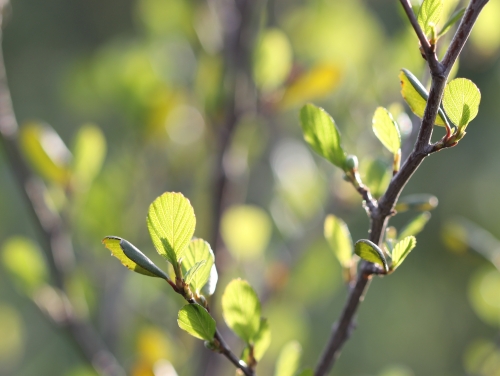
San Diego Mountain Mahogany is a beautiful native shrub that grows in Southern California, primarily in coastal Orange and San Diego counties, and in the western side of the Peninsular Range region, mostly at elevations from 0-4300 feet. It grows quickly to 8 feet, and then fairly slowly after that. Leaves are small and birch-shaped, delicate and emerald green in the winter and spring, and dark green, thick, and curled down during the dry season. Flowers are yellow. Probably its most spectacular feature are its feathery, silvery seeds produced in large quantities in late summer through early fall. The seeds light up in the sun, making the plant appear to have a silvery halo when back lit. It is nice as a hedge plant around San Diego.
It does well in full sun or part shade, and tolerates summer water up to 1x per month. It does best if planted near a seasonal creek or irrigated area. It can sprout from the stump if burned or severely cut back.
Shrub
6 - 16 ft Tall
10 ft Wide
Upright Columnar
Fast, Moderate
Evergreen
Slight

Cream, White, Yellow, Green
Winter, Spring
Hedge
Full Sun, Partial Shade
Low, Very Low
Max 2x / month once established
Moderate
Tolerates cold to 20° F
Fast, Medium, Slow
Tolerates a variety of soils including clay.
Soil PH: 6.0 - 8.0
If used in a narrow space or if a hedge is desired, it can be pruned or sheared as needed
For propagating by seed: No treatment.
3, 7, 14*, 15, 16, 18*, 19*, 20*, 21*, 22*, 23*, 24
Slopes, often near runoffs, seasonal creeks or slightly damper areas, from the coast to the foothills of the Peninsular Ranges, usually as part of chaparral vegetation but sometimes also associated with wetland edge species or oak woodland
Chaparral
Toyon (Heteromeles arbutifolia), Lemonadeberry (Rhus integrifolia), Manzanita (Arctostaphylos spp. and Xylococcus spp.), Ceanothus species, Milkweed (Asclepias spp.), Giant Wild Rye (Elymus condensatus), Sand Aster (Corethrogyne filaginifolia), Sagebrush (Artemisia californica), Monkeyflower (Mimulus spp.), Encelia californica, Buckwheat (Eriogonum spp.), Heartleaf Keckiella (Keckiella cordifolia), Penstemon species, Salvia species, Blue-eyed Grass (Sisyrinchium bellum)
Butterflies and moths supported
0 confirmed and 24 likely