

Carried by 32 nurseries
View Availability at NurseryData provided by the participants of the Consortium of California Herbaria
View additional distribution information on the Jepson eflora
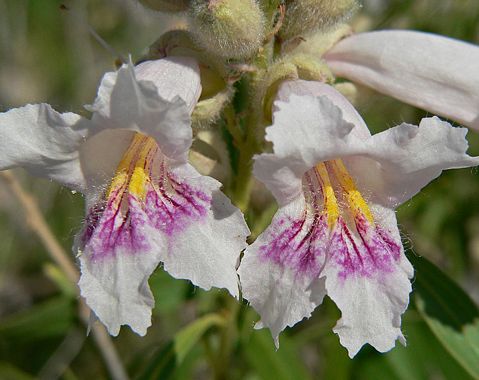
The desert willow is a small, multi-trunk tree that's notable for its fragrant, trumpet-shaped flowers that bloom in shades of pink, lavender, and white. The flowers attract pollinators, including hummingbirds, bees, and butterflies. Narrow leaves give this plant its name, but it is a member of the bignonia family, not a willow. It produces long seed pods and is winter deciduous.
The desert willow is native to southern California's desert regions and is a good choice for inland gardens. Plant in full sun and sandy soil. The desert willow needs minimal supplemental water but can enjoy some summer irrigation. Prune when the branches are bare in winter.
Shrub
5 - 26 ft Tall
10 - 20 ft Wide
Upright, Weeping
Moderate, Fast
Winter Deciduous
Pleasant

Purple, Lavender, Pink, White
Spring, Summer, Fall
Deer resistant
Full Sun
Low, Moderate, Very Low
Max 3x / month once established
Easy
Tolerates cold to 15° F
Fast
Prefers sandy or decomposed granite soil with moisture.
Soil PH: 6.0 - 9.0
As desired, during the dormant season
Seed germinates readily. May also be propagated by cuttings. For propagating by seed: No treatment.
Perennial desert streams, or sandy washes or canyons where there is likely to be subsurface water for most of the year. In the low desert, it is typically surrounded by creosote bush scrub. In higher desert, it occurs in Joshua Tree woodland.
Creosote Bush Scrub, Joshua Tree Woodland
California Fan Palm, Blue Paloverde, Desert Ironwood (Olneya tesota), Brittlebush (Encelia farinosa), Chuparosa (Justicia californica), Desert Lavender (Condea emoryi)
Butterflies and moths supported
1 confirmed and 1 likely
Rustic Sphinx
Manduca rustica
Wavy-Lined Emerald
Synchlora aerata
Desert willow + cvs. (n.d.). Waterwise Garden Planner. https://waterwisegardenplanner.org/plants/chilopsis-linearis/