

Carried by 8 nurseries
View Availability at NurseryData provided by the participants of the Consortium of California Herbaria
View additional distribution information on the Jepson eflora
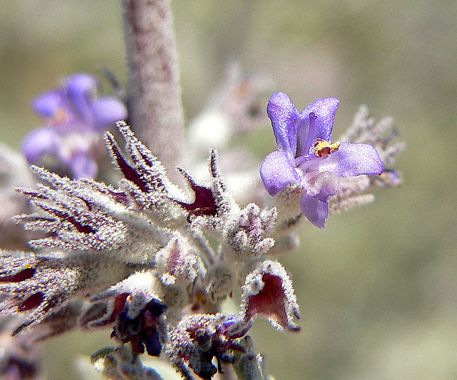
Desert lavender (Condea emoryi) is a fast-growing, aromatic shrub prized for its silvery-white, lavender-scented foliage and vibrant purple flowers, which can bloom year-round. Its fuzzy leaves and stems add texture to gardens, and it forms a dense, upright bush that can reach up to 12 feet tall and 8 feet wide.
As a semi-deciduous plant, desert lavender may drop some of its leaves during the heat of summer. It thrives in full sun and well-drained soil, making it an excellent choice for low-maintenance, water-wise landscapes. While highly drought-tolerant, it can handle occasional summer watering, about once a month.
This versatile shrub can be pruned into a hedge, with pruning ideally done in summer or fall. desert lavender is deer-resistant and attracts pollinators, making its fragrant flowers a favorite for hummingbirds and bees.
Shrub
6 - 12 ft Tall
8 ft Wide
Rounded, Upright Columnar
Moderate
Summer Semi-deciduous
Pleasant

Blue, Lavender
Spring, Winter
Hedge
Full Sun
Very Low, Low
Max 1x / month once established
Moderate
Tolerates cold to 25° F
Fast
Prefers sandy or decomposed granite soil.
Soil PH: 6.0 - 7.5
Prune as desired in Summer or Fall
8, 9, 10, 11, 12, 13, 14, 15, 16, 17, 19, 20, 21, 22, 23, 24
Gravelly, sandy washes, canyon bottoms and alluvial fans of the Colorado Desert, extending slightly into the Mojave Desert, usually as part of creosote bush scrub
Creosote Bush Scrub, Desert-Holly Scrub, Joshua Tree Woodland
Desert Willow (Chilopsis linearis), California Fan Palm (Washingtonia filifera), Creosote Bush (Larrea tridentata), Ocotillo (Fouquieria splendens), Jojoba (Simmondsia chinensis), Blue Paloverde (Parkinsonia florida), White Bursage (Ambrosia dumosa), Chuparosa (Justicia californica), Barrel Cactus (Ferocactus cylindraceus), Desert Agave (Agave deserti), Brittlebush (Encelia farinosa), Indigo Bush (Psorothamnus spp.), Smoke Tree (Psorothamnus spinosus), Apricot Mallow (Sphaeralcea ambigua), Opuntia spp., numerous annual wildflowers
Butterflies and moths supported
1 confirmed and 0 likely
Gray Hairstreak
Strymon melinus