

Carried by 7 nurseries
View Availability at NurseryData provided by the participants of the Consortium of California Herbaria
View additional distribution information on the Jepson eflora
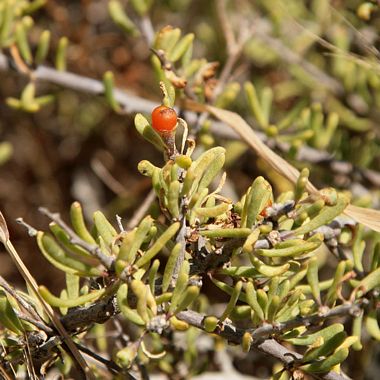
Lycium californicum is a sprawling shrub in the Solanaceae (Nightshade) family known by the common names California boxthorn and California desert-thorn. This plant is native to the coast of southern California, including the Channel Islands, from Los Angeles County into northern Baja California, as well as nearby Arizona. This slightly thorny shrub has thick, fleshy, bulbous green leaves and bell-shaped white flowers with purple streaks or spots. It bears bright red shiny berries 3 to 6 millimeters in diameter which are edible and taste like tomatoes. There are numerous relatives in the Lycium genus that are primarily desert plants, but this species is strictly coastal. In the wild it goes completely leafless in summer and appears dead. However, it responds very rapidly to rain and will even leaf out in response to a summer shower. If given continuous garden water it can remain evergreen.
Shrub
3 ft Tall
10 ft Wide
Mounding, Spreading
Moderate
Summer Deciduous, Summer Semi-deciduous, Evergreen

White, Purple, Red
Spring, Summer
Groundcover
Full Sun
Low, Very Low
Max 1x / month once established
Moderate
Tolerates cold to 25° F
Fast, Medium, Slow
Typically very sandy but can also tolerate clay.
Tolerates saline soil..
Soil PH: 6.0 - 7.0
Because of its rangy habit, it may need to be cut back periodically to control its spread. Prune in late summer when it is leafless.
Seeds or cuttings
8, 9, 14*, 15*, 16*, 17*, 19*, 20*, 21*, 22*, 23*, 24*
Buffs and slopes, lagoon edges, marine terraces, and similar areas within about 10 miles of the coast
Coastal Sage Scrub
Use with other sage scrub plants including Shaw's Agave (Agave shawii), Sagebrush (Artemisia californica), San Diego Viguiera (Bahiopsis laciniata), Nevin's barberry (Berberis nevinii), Bushrue (Cneoridium dumosum), Dudleya spp., California Encelia (Encelia californica), Buckwheat (Eriogonum fasciculatum or parvifolium), San Diego Barrel Cactus (Ferocactus viridescens), Chaparral Yucca (Hesperoyucca whipplei), Menzies' Goldenbush (Isocoma menziesii), Fishhook Cactus (Mammillaria dioica), Nuttall's Scrub Oak (Quercus dumosa), Redberry (Rhamnus crocea), Sage (Salvia spp.)
Butterflies and moths supported
0 confirmed and 3 likely