

Carried by 9 nurseries
View Availability at NurseryData provided by the participants of the Consortium of California Herbaria
View additional distribution information on the Jepson eflora
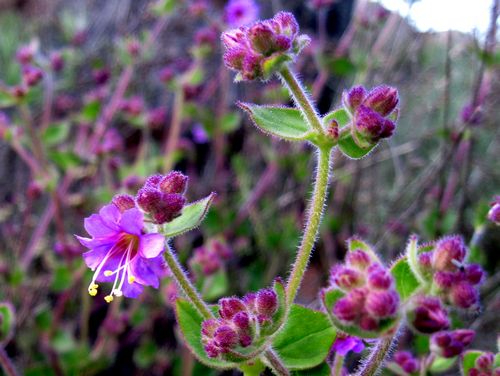
Desert wishbone bush (Mirabilis laevis) is a low-growing, drought-tolerant shrub in the Four O'Clock family (Nyctaginaceae). This species, recently redefined, now includes several varieties previously classified as separate species, such as the well-known California chaparral plant Mirabilis californica. There are currently five recognized varieties, all found in the southern half of California.
This trailing shrub reaches about one foot in height and spreads up to eight feet wide, making it an excellent choice for ground cover in native gardens. Its bright pink to magenta flowers bloom in spring, opening in the morning and afternoon before closing during the heat of the day. After flowering, the plant enters summer dormancy, losing its leaves until cooler weather returns.
Desert wishbone bush thrives in full to part sun and well-draining soils. It is highly drought-tolerant and grows quickly once established. The plant also supports biodiversity, hosting up to seven species of butterflies and moths, making it a valuable addition to wildlife-friendly landscapes.
Perennial herb
1 ft Tall
8 ft Wide
Spreading
Summer Semi-deciduous

Purple, Lavender, White
Spring, Winter
Groundcover
Full Sun, Partial Shade
Very Low
Max 1x / month once established
Moderate
Tolerates cold to 25° F
Medium
Variable soil depending on the location and setting.
Soil PH: 5.0 - 8.0
May be sheared in late summer to control its spread
Many settings including coastal, mountains, and deserts
Chaparral, Coastal Sage Scrub, Foothill Woodland
Has many companions depending on location and setting, including Manzanita (Arctostaphylos spp.), Coyote Brush (Baccharis pilularis), Ceanothus spp., Tree Poppy (Dendromecon rigida), Flannelbush (Fremontodendron spp.), Toyon (Heteromeles arbutifolia), California Juniper (Juniperus californica), Hollyleaf Cherry (Prunus ilicifolia), and Oak (Quercus spp.)
Butterflies and moths supported
1 confirmed and 7 likely
Somber Carpet
Disclisioprocta stellata