

Carried by 4 nurseries
View Availability at NurseryData provided by the participants of the Consortium of California Herbaria
View additional distribution information on the Jepson eflora
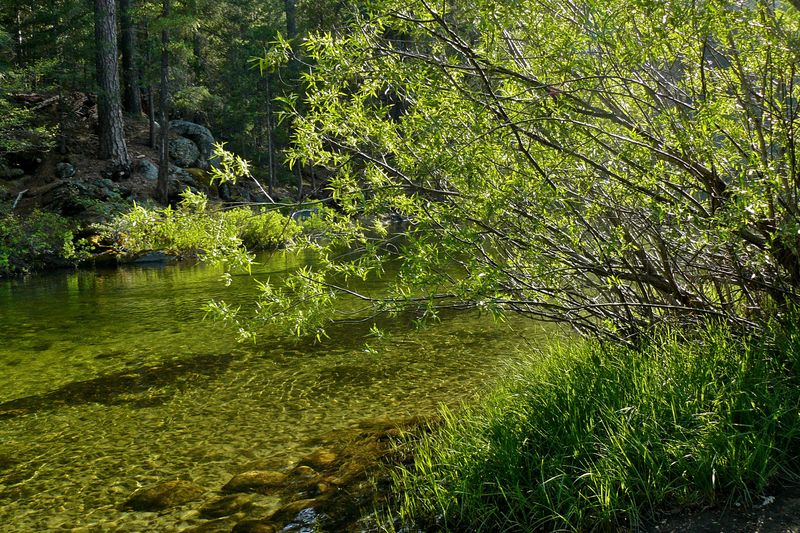
Salix lasiandra is a native willow tree that grows in virtually every county of the state in wetland-riparian areas. It is a suckering willow that will extend its roots and spread into any area that has sufficient moisture. It was formerly classified as a subspecies of Salix lucida, and some sources may still refer to it by that name. There are two recognized Varieties: Var. lasiandra is widespread. Var. caudata (Shining Willow) is less common and restricted to the Sierras and northward. Like all willows, this species prefers alluvial soils with plenty of water. It is not often seen in residential gardens but is useful in restoration projects, bioswales, and other consistently wet areas.
Tree, Shrub
3 - 30 ft Tall
Upright
Fast
Winter Deciduous

White, Yellow
Spring
Water features or wet habitats
Partial Shade
High
Keep moist
Tolerates cold to -10° F
Slow, Standing
Tolerates a variety of soils but prefers alluvial soil.
Soil PH: 5.0 - 7.0
Stream banks, pond margins, drainage ditches, and other wet areas, from sea level to 8, 500 ft.
Chaparral, Foothill Woodland, Lodgepole Forest, Red Fir Forest, Subalpine Forest, Valley Grassland, Yellow Pine Forest, Wetland-Riparian
Use with other wetland-riparian plants such as Sycamore (Platanus racemosa), Cottonwood (Populus spp.), Sedges (Carex spp.), Rush (Juncus), etc.
Butterflies and moths supported
4 confirmed and 220 likely
Nevada Buckmoth
Hemileuca nevadensis
Lorquin's Admiral
Limenitis lorquini
Mourning Cloak
Nymphalis antiopa
Western Tiger Swallowtail
Papilio rutulus