

Carried by 51 nurseries
View Availability at NurseryData provided by the participants of the Consortium of California Herbaria
View additional distribution information on the Jepson eflora
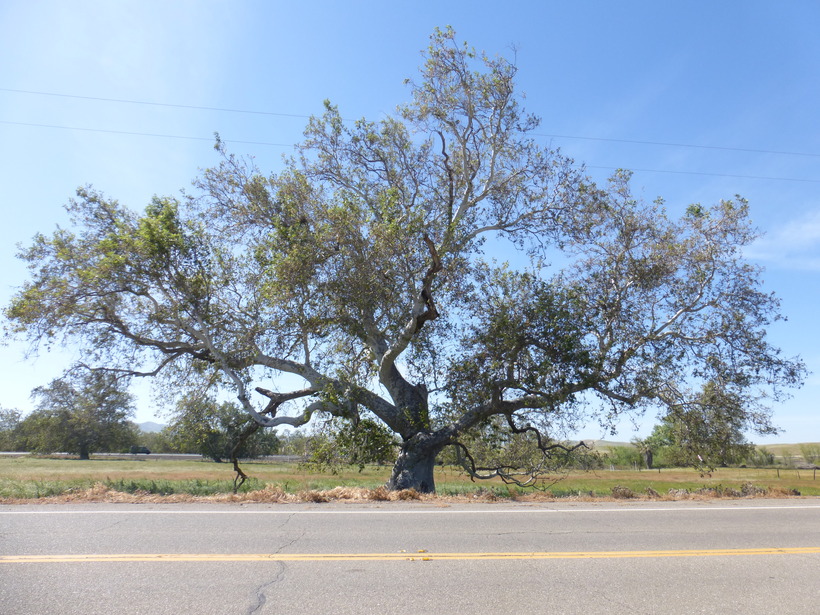
The Western Sycamore (Platanus racemosa), a species of plane tree native to California, is a tall, distinctive tree that stands out in any landscape. This tree is known for its bark, which is mottled in shades of pale tan, gray, and white. The bark peels as it ages. It has twisting branches and large leaves which turn orange-yellow in the fall. It produces seed balls after blooming. It's an important host plant for the Western Tiger Swallowtail butterfly.
Naturally found in moist areas near rivers and streams, this tree requires a significant amount of water to thrive. When not planted near a water source, it needs regular irrigation. The Western Sycamore tolerates different soil types and does best in full sun. It can grow up to 100 feet tall and 50 feet wide, so be sure to give new trees a large planting area.
Tree
20 - 115 ft Tall
50 ft Wide
Rounded, Upright Columnar
Fast, Slow
Winter Deciduous
None

Orange, Yellow, Cream, Brown
Spring, Winter
Deer resistant
Full Sun
Moderate, High
Max 1x / month once established
Easy
Tolerates cold to 10° F
Fast, Medium, Slow
Tolerates sand and clay.
Soil PH: 5.0 - 8.0
Stratified seed. For propagating by seed: 2 to 3 months stratification.
1, 2, 3, 7, 8, 9, 11*, 14, 15, 16, 17, 18*, 19*, 20*, 21*, 22, 23, 24
Almost always found in wetland-riparian settings such as streamsides, canyon bottoms with more moisture below 4, 000 feet from northern Central Valley to coastal San Diego County and Baja. It is often found adjacent to drier habitats such as chaparral, valley grassland, mixed woodlands or evergreen forests.
Chaparral, Foothill Woodland, Valley Grassland, Yellow Pine Forest, Wetland-Riparian
Its large, deciduous leaves tend to bury small understory plants unless regular leaf removal is carried out. Use with larger shrubs or small trees that can tolerate additional water, such as Wild Rose (Rosa californica), Ninebark (Physocarpus capitatus), Mock Orange (Philadelphus lewisii), willows (Salix spp.), and Mulefat (Baccharis salacifolia).
Butterflies and moths supported
3 confirmed and 8 likely
Western Tiger Swallowtail
Papilio rutulus
Ceanothus Borer Moth
Synanthedon mellinipennis
Sycamore Borer Moth
Synanthedon resplendens
Polyphemus moth
Antheraea polyphemus