

Carried by 54 nurseries
View Availability at NurseryData provided by the participants of the Consortium of California Herbaria
View additional distribution information on the Jepson eflora
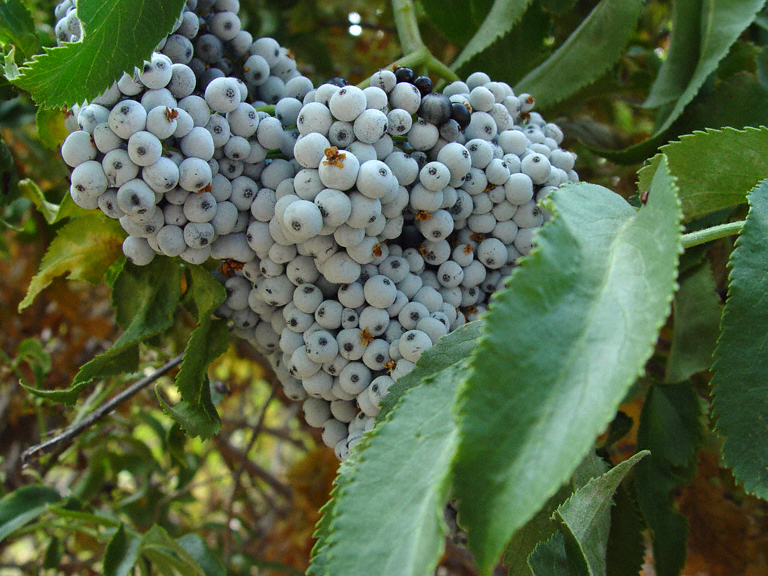
Attractive, hardy, and easy to grow, the Blue Elderberry is also an important food source for California wildlife. In spring, large clusters of cream-colored flowers attract butterflies and bees. The abundant blue berries provide food for birds and other animals. Humans can eat the fruit as long as it's cooked.
This fast-growing shrub is tolerant of a variety of growing conditions, although it does best in sun and well-drained moist, rich soil. It can grow to the size of a small tree, up to 30 feet tall but is easily shaped with pruning.
Tree, Shrub
20 - 30 ft Tall
20 - 30 ft Wide
Fountain
Fast
Winter Deciduous
Pleasant

Yellow, Purple, Cream
Summer, Spring
Deer resistant
Full Sun, Partial Shade, Deep Shade
Low, Moderate
Max 1x / month once established
Tolerates cold to 5° F
Fast, Medium
Tolerates a variety of soils but prefers well-drained soils with moisture.
Soil PH: 6.0 - 7.0
Accepts pruning readily .
Streambanks, slope bottoms, canyons, slightly moister places throughout the state. It occurs in conjunction with a variety of vegetation types including chaparral, sage scrub, grassland, and wetland-riparian.
Foothill Woodland, Lodgepole Forest, Pinyon-Juniper Woodland, Red Fir Forest, Southern Oak Woodland, Subalpine Forest, Yellow Pine Forest
Toyon (Heteromeles arbutifolia); Coast Live Oak, White Flowering Currant
Butterflies and moths supported
0 confirmed and 23 likely
Common Gray
Anavitrinella pampinaria
Polyphemus moth
Antheraea polyphemus
Lady Bird Johnson Wildflower Center - The University of Texas at Austin. (n.d.). Www.wildflower.org. Retrieved October 18, 2023, from https://www.wildflower.org/plants/result.php?id_plant=SANIC5