

Carried by 8 nurseries
View Availability at NurseryData provided by the participants of the Consortium of California Herbaria
View additional distribution information on the Jepson eflora
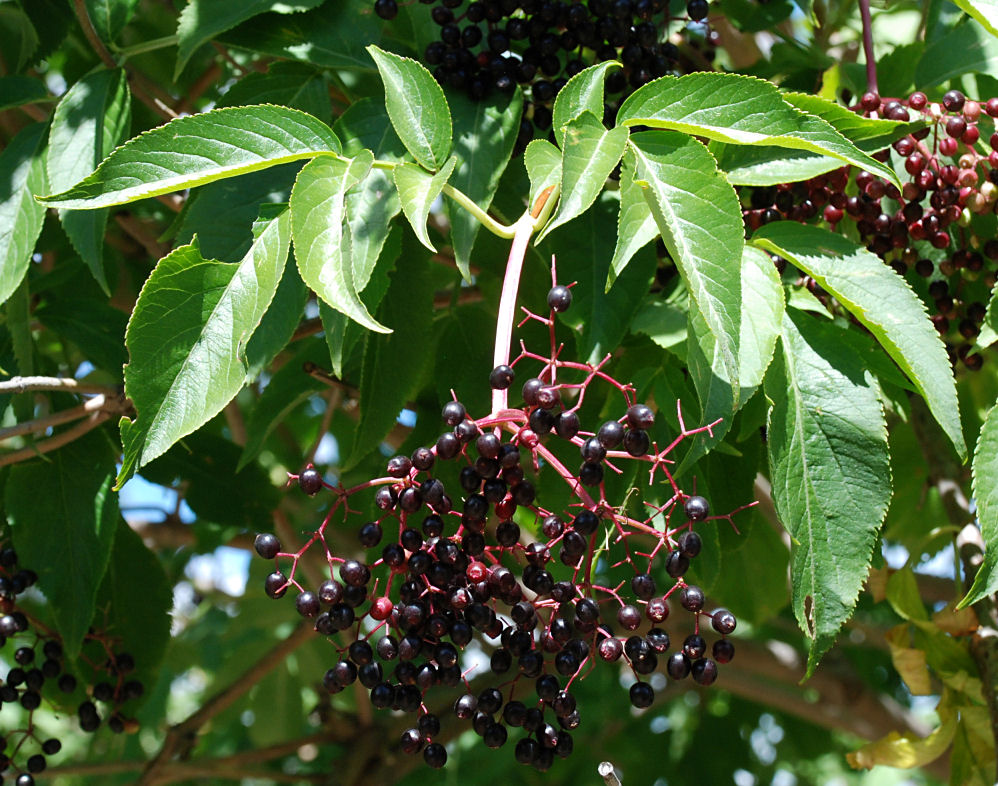
Black elderberry (Sambucus nigra) is a deciduous shrub or small tree which is tough, easy to grow, and grows very rapidly. In summer large flat clusters of cream or yellow flowers bloom then form small dark purple or black berries that droop from the branches in late autumn. This tree is native from Oregon to Baja all the way to western Texas. It is in the relatively newly designated Adoxaceae (Moschatel) family.
The berries are an important source of food for many fruit-eating birds in California.
You can plant a black elderberry from a 1 gallon container and have a 15 foot tree in your garden in 3 years. In the garden, this tree likes regular water but can also adapt to summer drought. You can prune it to promote branching and prevent a loose, rangy form.
Tree, Shrub
13 - 30 ft Tall
10 - 20 ft Wide
Spreading, Upright
Fast
Winter Deciduous

Purple, Cream, White, Black
Spring
Hedge
Low, Moderate
Max 2x / month once established
Easy
Tolerates cold to 0° F
Medium
Tolerates most soils.
Soil PH: 5.0 - 8.0
Prune to shape in winter when it is leafless. New growth in spring will be vigorous.
Valleys, canyons, washes, slopes, seasonal drainages, and other areas where a little extra moisture is present. Sometimes found as part of wetland/riparian community, other times in portions of chaparral or woodland that have moderate water levels.
Use caution in placement, because the berries can be messy, staining concrete or cars. Can be used with a wide variety of chaparral and woodland plants, including Firs (Abies spp.), Pines (Pinus spp.), Manzanita (Arctostaphylos spsp), Ceanothus spp., Toyon (Heteromeles arbutifolia), Mahonia/Barberry (Berberis spp.), and Currant/Gooseberry (Ribes spp.).
Butterflies and moths supported
4 confirmed and 19 likely
Tacoma Cutworm
Trichordestra tacoma
Elder Moth
Zotheca tranquilla