

Carried by 45 nurseries
View Availability at NurseryData provided by the participants of the Consortium of California Herbaria
View additional distribution information on the Jepson eflora
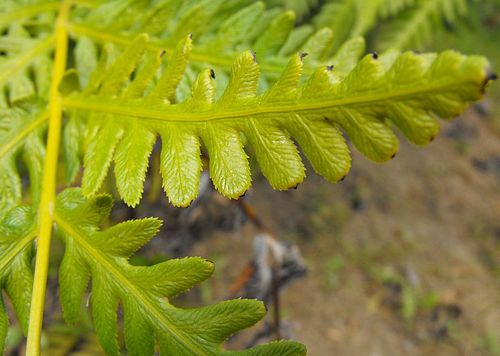
Giant Chain Fern (Woodwardia fimbriata) is the largest fern in North America, with upright, arching fronds that are wide and lacy. It can reach 3 to 5 feet tall. It will be either evergreen or summer deciduous, depending on its growing conditions.
Giant chain fern prefers part to full shade and likes some moisture but does not want to be kept wet. Allowing it to dry out just a little between waterings is good. It prefers fertile soil with good drainage but is adaptable to different types of soil. To keep it looking fresh and vigorous, cut back to the ground in late winter. Due to its size and shape, it is excellent as an accent in shaded areas or a woodland setting.
Fern
4 - 6 ft Tall
4 - 6 ft Wide
Fountain
Moderate
Evergreen, Summer Semi-deciduous
Slight
Containers, Hedge
Partial Shade, Deep Shade
Moderate
Max 1x / week once established
Easy
Tolerates cold to 0 - 10° F
Fast
Prefers moist, fertile soil with good drainage.
Soil PH: 5 - 7
Remove dry fronds to improve appearance and encourage new growth
2, 3, 4*, 5*, 6*, 7*, 8, 9, 14*, 15*, 16*, 17*, 18, 19, 20, 21, 22, 23, 24
Forests, seeps or near springs in shade or part shade
Foothill Woodland, Valley Grassland, Yellow Pine Forest, Wetland-Riparian
Trees: Ponderosa Pine (Pinus ponderosa), Tanoak (Notholithocarpus densiflorus), Madrone (Arbutus menziesii), Oak (Quercus spp.), Coast Redwood (Sequoia sempervirens), Dogwood (Cornus spp.)
Other Plants: Maidenhair Fern (Adiantum spp., Deer Fern Blechnum spicant), Horsetail (Equisetum spp.), Polypody Fern (Polypodium spp.), Sword Fern (Polystichum spp.), Meadow Rue (Thalicturm spp.), Yerba Buena (Clinopodium douglasii), Western Columbine (Aquilegia formosa), Monkeyflower (Mimulus cardinalis or guttatus)