

Carried by 10 nurseries
View Availability at NurseryData provided by the participants of the Consortium of California Herbaria
View additional distribution information on the Jepson eflora
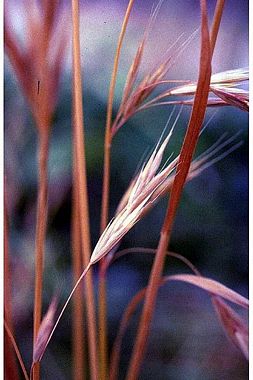
Bromus carinatus is a species of native bunchgrass known by the common names California Brome and Mountain Brome. It is native to western North America from Alaska to northern Mexico, where it can be found in many types of habitat. It is found in every county in California. It is a perennial grass growing in clumps 0.5 to 1.5 meters tall, with many narrow leaves up to 40 centimeters long. The flower cluster is a spreading or drooping array of flat spikelets longer than they are wide. The grass is wind-pollinated but is also sometimes cleistogamous, so that the flowers pollinate themselves, especially under stressful conditions. It also reproduces vegetatively via tillers. This grass is used for control of erosion and revegetation of damaged land, as well as a highly palatable forage for livestock. In the garden it has a reputation for being short-lived but readily re-seeds. It completes well with non-native weeds, and its sod-building root system makes it useful for erosion control.
Grass
1 - 5 ft Tall
1 ft Wide
Upright, Spreading
Fast
Summer Deciduous
None

Yellow
Spring
Groundcover
Full Sun, Partial Shade
Low
Max 2x / month once established
Easy
Tolerates cold to -15° F
Medium, Slow
Tolerates most soil types but especially good in clay.
Soil PH: 5.5 - 8.0
Responds favorably to mowing in spring and summer.
Propagate from seeds, which are easily collected from the inflorescence.
Found in virtually all natural settings in California
Alpine Fell-Fields, Chaparral, Foothill Woodland, Lodgepole Forest, Red Fir Forest, Subalpine Forest, Valley Grassland, Yellow Pine Forest
California brome is a common widespread grass and can be grown successfully with many other California Natives that prefer sun and some summer water, such as Black oak (Quercus kelloggii), Douglas' sagewort (Artemesia douglasiana), and dog violet (Viola adunca).
Butterflies and moths supported
1 confirmed and 5 likely
Umber Skipper
Poanes melane
Common Roadside-Skipper
Amblyscirtes vialis
Arctic Skipper
Carterocephalus palaemon
Yellow-Collared Scape Moth
Cisseps fulvicollis