

Carried by 6 nurseries
View Availability at NurseryData provided by the participants of the Consortium of California Herbaria
View additional distribution information on the Jepson eflora
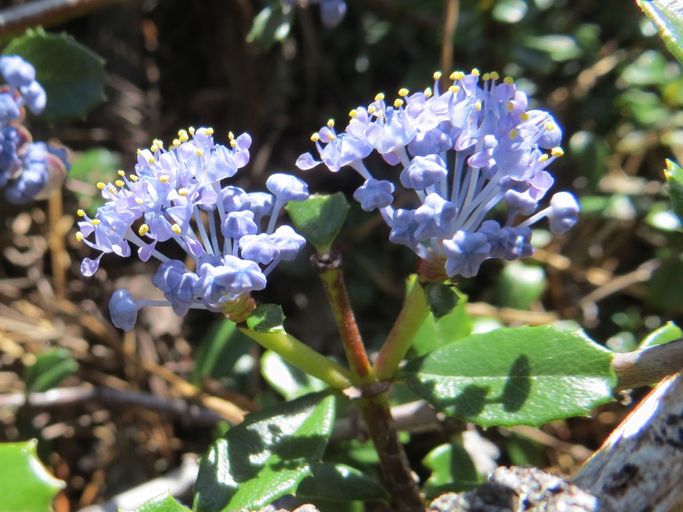
Mt. Vision Ceanothus is one of three recognized varieties of Ceanothus gloriosus. All three varieties are rare, but var. porrectus is the most rare and has the most limited distribution, being restricted to a handful of sites in the vicinity of Pt. Reyes and Tomales Bay. This is an area that receives significant moisture from summer fog. Mt. Vision Ceanothus tends to grow in sandy places, at elevations from sea level to 1,000 feet. It is low growing, forming a mat or low mound. The evergreen leaves are oppositely arranged and up to 5 centimeters long, rounded to oval in shape. The edges are toothed, the teeth sometimes spine-tipped. The flower cluster is bright blue to purple. The fruit is a horned capsule about 4 millimeters wide. Although this plant is native to the north coast, it has been used in other coastal parts of the state if conditions similar to its native habitat can be maintained.
Shrub
3 ft Tall
8 ft Wide
Spreading
Moderate
Evergreen
Pleasant

Blue, Lavender, Purple
Winter, Spring
Bank stabilization, Groundcover
Partial Shade
Very Low
Max 1x / week once established
Moderate
Tolerates cold to 0° F
Fast
Prefers sand or sandstone.
Soil PH: 5.0 - 7.0
Sandy places, bluffs, shrubby slopes, ridges of Marin County
Closed-cone Pine Forest, Coastal Prairie, Northern Coastal Scrub, Valley Grassland
Manzanita (Arctostaphylos spp.), North Coast Dudleya (Dudleya farinosa), Seaside Daisy (Erigeron spp.), Seaside Buckwheat (Eriogonum latifolium), Coffeeberry (Frangula californica), Coast Silktassel (Garry elliptica), Lupine (Lupinus spp.)
Butterflies and moths supported
0 confirmed and 72 likely
Sallow Button
Acleris hastiana
Cottonwood Dagger Moth
Acronicta lepusculina