

Carried by 35 nurseries
View Availability at NurseryData provided by the participants of the Consortium of California Herbaria
View additional distribution information on the Jepson eflora
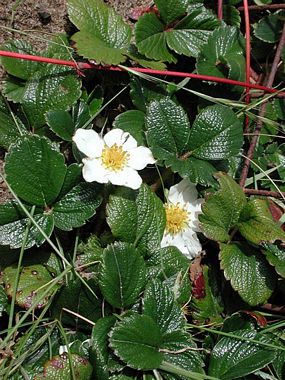
Beach Strawberry (Fragaria chiloensis) is one of the two strawberry species used to create the modern garden strawberry.
In spring to early summer, it blooms with beautiful white flowers, which are later replaced by unique red fruits. Local bees and butterflies pollinate flowers and its fruits draw the attention of a variety of insects, birds and mammals.
It has dark-green, glossy leaves that turn red in fall. It has a creeping habit and spreads at a moderate rate. Plant in very low to low moisture, and in sandy soil.
Perennial herb
1 - 4 in Tall
2 - 3 ft Wide
Spreading
Moderate
Evergreen
Slight

White
Spring, Summer, Winter
Containers, Deer resistant, Groundcover, Lawn alternative
Partial Shade, Full Sun
Moderate
Max 1x / month once established, Max 2x / month once established
Easy
Tolerates cold to 25° F
Fast
Prefers sandy soils.
Soil PH: 5.6 - 6.3
Can be cut back at any time.
Divide rooted runners and transplant.
4*, 5*, 7, 8, 9, 14*, 15*, 16*, 17*, 19, 20, 21, 22*, 23*, 24*
Ocean beaches, dunes, coastal grassland
Coastal Strand, Northern Coastal Scrub
Use with other low-growing coastal plants such as Sand Verbena (Abronia latifolia or umbellata), Beach bur (Ambrosia chamissonis), Beach Morning Glory (Calystegia soldanella), Seaside Daisy (Erigeron spp.), and Oregon Gumweed (Grindelia stricta)
Butterflies and moths supported
3 confirmed and 32 likely
Drab Brown Wave
Lobocleta ossularia
Filament Bearer
Nematocampa resistaria
Luteus Dart Moth
Abagrotis trigona
Fragaria chiloensis, Sand Strawberry. (n.d.). Www.laspilitas.com. Retrieved October 20, 2023, from https://www.laspilitas.com/nature-of-california/plants/312--fragaria-chiloensis