

Carried by 5 nurseries
View Availability at NurseryData provided by the participants of the Consortium of California Herbaria
View additional distribution information on the Jepson eflora
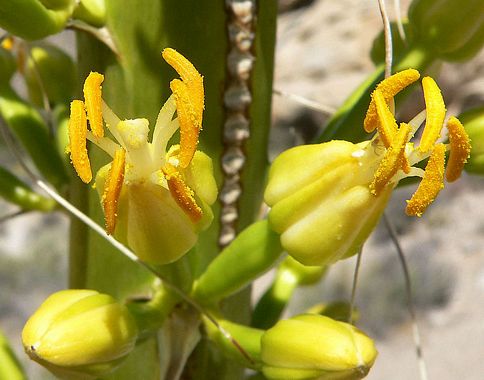
Agave utahensis is a species of agave known by the common name Utah agave. There are two recognized varieties in California, both of which are rare. Agave utahensis is smaller, occurs farther north, at higher elevations, and is more cold tolerant than the other two native agaves in California. Like other agaves, it is armed with formidable spines and flowers after many years of growth, then the plant dies but clonal pups remain. It is found in the high desert mountains of Inyo and San Bernardino Counties. This is a rosette-shaped agave having blue-green sharp-spiked leaves. The raceme flower cluster is very tall, reaching a maximum of four meters. It is generally yellow or yellow-green with bulbous yellow flowers. The fruits are capsules 1 to 3 centimeters long and containing black seed. The plant was used for food and fiber by local Native American peoples such as the Havasupai.
Shrub, Succulent
1 - 2 ft Tall
2 ft Wide
Upright
Slow, Moderate
Evergreen

Yellow, Green
Spring
Containers, Deer resistant
Full Sun, Partial Shade
Extremely Low, Very Low
Never irrigate once established
Tolerates cold to -10° F
Fast
Prefers sandy, gravelly or rocky soil.
For propagating by seed: No treatment.
3, 7, 8, 9, 10*, 11*, 12*, 13, 14, 18*, 19, 20, 21
Rocky desert places
Creosote Bush Scrub, Joshua Tree Woodland, Pinyon-Juniper Woodland
Use with other Mojave Desert species such as Bigberry Manzanita (Arctostaphylos glauca), Big Sagebrush (Artemisia tridentata), Fremont Barberry (Berberis fremontii), Desert Ceanothus (Ceanothus greggii), Desert Willow (Chilpsis linearis), Buckwheat (Eriogonum spp.), Apache Plume (Fallugia paradoxa), California Juniper (Juniperus californica), Bladderpod (Peritoma arborea), Antelope Brush (Purshia stansburyana or tridentata), Sage (Salvia dorrii or mohavensis), Jojoba (Simmondsia chinensis), Banana Yucca (Yucca baccata), and various cactus species.
Butterflies and moths supported
1 confirmed and 0 likely
Mojave Giant-Skipper
Agathymus alliae