

Carried by 4 nurseries
View Availability at NurseryData provided by the participants of the Consortium of California Herbaria
View additional distribution information on the Jepson eflora
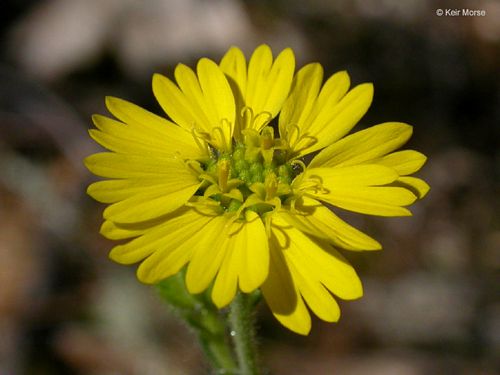
Anisocarpus madioides (syn. Madia madioides) is a species of flowering plant in the aster family known by the common name woodland madia. It is native to the west coast of North America from Vancouver Island in British Columbia to the Peninsular Ranges of southern California. It is a plant of forest and woodland habitat. This is a perennial herb growing up to about 75 centimeters in maximum height, its stem coated in rough hairs and stalked resin glands. The lower leaves are up to 12 centimeters long, oppositely arranged, and fused around the stem at the bases. The upper leaves are much smaller and often alternately arranged. The flower cluster produces several flower heads on long peduncles, each with a rounded involucre of hairy phyllaries. The heads bear yellow ray florets up to a centimeter long and many disc florets. The fruit is an achene a few millimeters long, usually with a small pappus.
Perennial herb
2 ft Tall
Evergreen, Summer Semi-deciduous
Slight

Yellow
Spring, Summer
Deep Shade, Partial Shade
Extremely Low, Very Low, Low
Max 2x / month once established
Easy
Fast, Medium
Dead flower stalks can be cut back in fall. Allow to set seed first if you want more plants; does self sow but not aggressively.
1, 4*, 5*, 6*, 7, 14, 15*, 16*, 17*
Woodlands, Forests
Red Fir Forest, Yellow Pine Forest
Pink Honeysuckle (Lonicera hispidula), Western Bracken Fern (Pteridium aquilinum), Western Sword Fern (Polystichum munitum), Fernald's Iris (Iris fernaldii), White Globe Lily (Calochortus albus), Milk Maids (Cardamine californica), Woodland Strawberry (Fragaria vesca)
Butterflies and moths supported
0 confirmed and 3 likely
Spotted Straw Sun Moth
Heliothis phloxiphaga
Small Heliothodes Moth
Heliothodes diminutivus