

Carried by 41 nurseries
View Availability at NurseryData provided by the participants of the Consortium of California Herbaria
View additional distribution information on the Jepson eflora
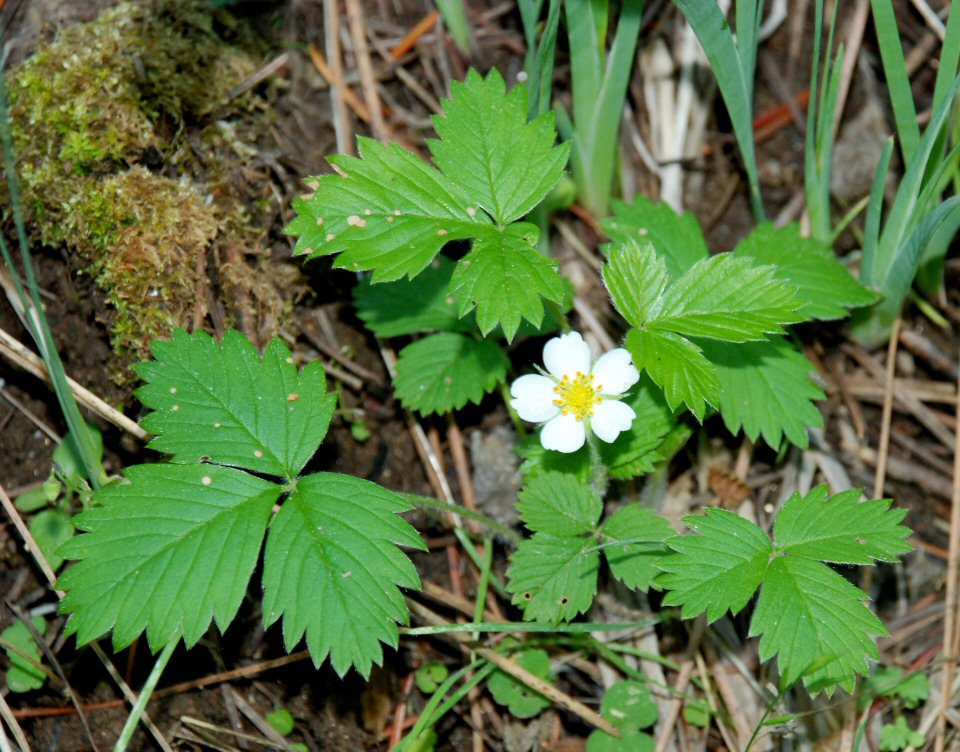
Woodland Strawberry (Fragaria vesca) is a perennial groundcover in the Rose family (Rosaceae). Naturally occurring across the Northern Hemisphere, it is also commonly known as Wild Strawberry and Wood Strawberry. Spreading by rhizomes (underground) and stolons (above-ground runners), the dark green leaves and bright red fruits make an attractive groundcover. The fruits are small but flavorful and are priced both by wildlife and humans. Bees and other pollinators adore the flowers.
As the name suggests, Woodland Strawberry grows in partly shady Woodland and Forest habitats. Although tolerant of dry sites in full shade, they grow in moist locations in part sun, such as near creeks or streams. Plant Woodland Strawberries in a shady area of the yard, along pathways, between stepping stones, amongst ferns and under mature trees and shrubs. To propagate more plants, dig up and relocate new plants that have rooted from the runners. Do this in early spring just as new growth appears.
Perennial herb
1 - 12 in Tall
3 ft Wide

White
Winter, Spring
Containers, Deer resistant, Groundcover, Lawn alternative
Deep Shade, Full Sun, Partial Shade
Moderate
Max 3x / month once established
Easy
Tolerates cold to -5° F
Slow, Medium
Tolerates clay and garden soil.
Soil PH: 5.4 - 6.8
1, 2, 4*, 5*, 6*, 7*, 8, 9, 14*, 15*, 16*, 17*, 18*, 19*, 20*, 21*, 22*, 23*, 24*
Woodlands
Chaparral, Closed-cone Pine Forest, Douglas-Fir Forest, Mixed Evergreen Forest, Yellow Pine Forest
Use with woodland trees, shrubs and herbs such as False Indigo (Amorpha californica), Manzanita (Arctostaphylos spp.), Incense Cedar (Calocedrus decurrens), Mariposa Lily (Calochortus spp.), Ceanothus spp., Fleabane (Erigeron spp.), Silk Tassel Bush (Garrya spp.), Crevice Alumroot (Heuchera micrantha), Ocean Spray (Holodiscus discolor), Leopard Lily (Lilium pardalinum), Tanoak (Notholithocarpus densiflorus), Douglas Fir (Pseudotsuga menziesii), and many others.
Butterflies and moths supported
1 confirmed and 41 likely
Orange Tortrix Moth
Argyrotaenia franciscana
Luteus Dart Moth
Abagrotis trigona
Garden Webworm Moth
Achyra rantalis