

Carried by 10 nurseries
View Availability at NurseryData provided by the participants of the Consortium of California Herbaria
View additional distribution information on the Jepson eflora
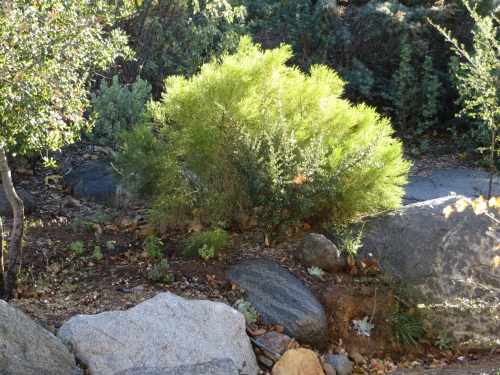
Baccharis sarothroides is a species of flowering shrub known by the common names broom baccharis and desert broom. It grows up to 12 feet tall and up to 6 feet wide. The leaves are small and thick, and tends to stay bright green through the year in the foothills and areas with around 15" of rainfall per year. The plant goes summer deciduous and loses its leaves in the drier desert regions. It flowers abundantly in the summer, often completely covered with white or cream covered puffy flowers. This plant is native to northern Mexico and the southwestern United States, growing in coastal sage scrub and inland scrub plant communities, usually in dry canyons and plains below 1000 feet. In California it is limited to the southern part of the state. It is a useful plant for a screen, slope stabilization or filling in large empty areas. The voluminous seeds may be considered a nuisance.
Shrub
3 - 12 ft Tall
6 ft Wide
Upright, Rounded
Fast, Moderate
Evergreen
None

Yellow, Cream, White
Winter
Bank stabilization, Hedge
Full Sun
Low, Very Low
Max 2x / month once established
Easy
Tolerates cold to 25° F
Fast, Medium
Tolerates a variety of soils.
Tolerates sodic soil..
Soil PH: 6.0 - 8.0
Prune in fall to shape and improve appearance
For propagating by seed: No treatment.
7, 8, 9, 10, 11, 12, 13, 14, 15, 16, 17, 18, 19*, 20*, 21*, 22*, 23*, 24*
Gravelly and sandy washes, flats
Coastal Sage Scrub, Creosote Bush Scrub, Wetland-Riparian
California Copperleaf (Acalypha californica), Chamise (Adenostema fasciculatum), California Buckwheat (Eriogonum fasciculatum), Chaparral Mallow (Malacothamnus fasciculatus), Brittlebush (Encelia spp.), Desert Agave (Agave deserti), Mojave Yucca (Yucca shidigera), Creosote (Larrea tridentata), Big Sagebrush (Artemisia tridentata), and cactus species
Butterflies and moths supported
1 confirmed and 16 likely
Common Gray
Anavitrinella pampinaria
Orange Tortrix Moth
Argyrotaenia franciscana