

Carried by 29 nurseries
View Availability at NurseryData provided by the participants of the Consortium of California Herbaria
View additional distribution information on the Jepson eflora
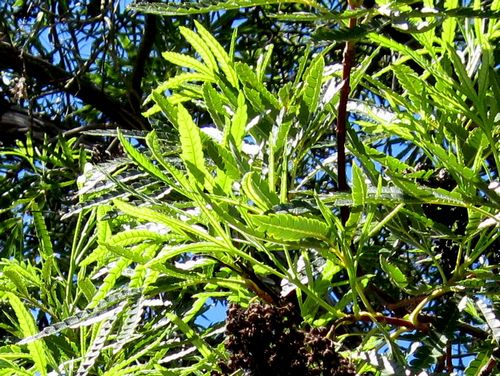
Santa Cruz Island Ironwood (Lyonothamnus floribundus ssp. aspleniifolius) is a medium-sized evergreen tree native to the Channel Islands, growing on rocky slopes in chaparral and oak woodlands at elevations from 100-1600 feet. It is known for its attractive, peeling reddish-gray bark and shiny, dark green leaves with lighter undersides. The leaves of this subspecies are fern-like, incised, and distinctive compared to the smooth, undivided leaves of the Catalina Island ironwood (L.f. ssp. floribundus), which is rarely seen in horticulture.
In summer, this tree produces clusters of woolly white flowers, which turn orange-rust as they age, providing year-round visual interest. Santa Cruz Island ironwood is commonly found in native plant nurseries and is often used as a specimen or feature tree in gardens.
The tree's wildlife value is significant, as it attracts a range of pollinators with its showy flowers. Birds are also known to be attracted to the hard, follicle-shaped fruits. This ironwood is well-suited for Mediterranean-style landscapes, providing shelter and food for various species.
Tree
25 - 50 ft Tall
12 - 24 ft Wide
Upright
Fast
Evergreen
None

Cream, White
Summer, Spring
Bank stabilization, Hedge
Full Sun
Low
Max 1x / month once established
Easy
Tolerates cold to 30° F
Fast, Medium
This tree is tolerant of a variety of soils as long as drainage is reasonably good.
Soil PH: 5.0 - 8.0
Rocky slopes and protected canyons on Santa Cruz Island, Santa Rosa Island, and San Clemente Island. Plant community habitats include Broadleafed upland forest, Chaparral, and Cismontane woodland.
Chaparral
Use with other island species such as Catalina Island Manzanita (Arctostaphylos catalinae), Santa Cruz Island Buckwheat (Eriogonum arborescens), St. Catherine's Lace (Eriogonum giganteum), Redflower Bucksheat (Eriogonum grande var. rubescens), Tree Poppy (Dendromecon harfordii), Giant Coreopsis (Leptosyne gigantea), Catalina Cherry (Prunus ilicifolia ssp. lyonii), Island Hazardia (Hazardia cana) and Island Bristleweed (Hazardia detonsa)