

Carried by 59 nurseries
View Availability at NurseryData provided by the participants of the Consortium of California Herbaria
View additional distribution information on the Jepson eflora
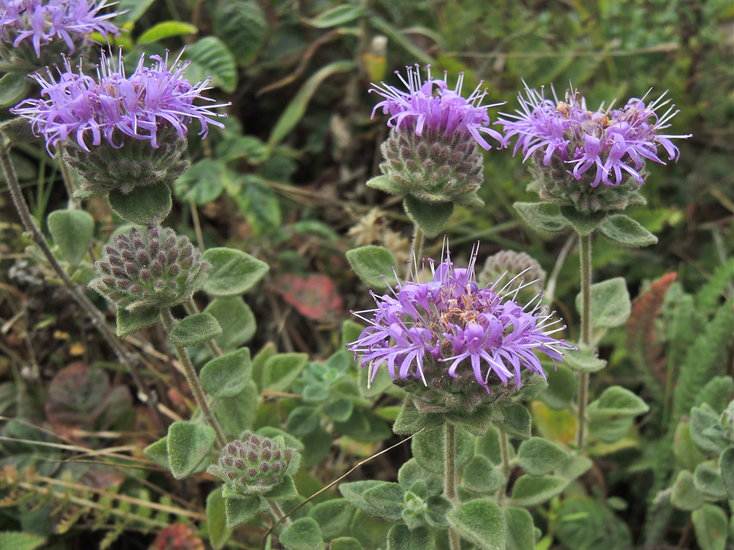
Coyote Mint is a spreading subshrub distinguished by its fragrant mint-scented foliage and delicate lavender flowers. During the summer blooming season, the flowers are attractive to bees and especially butterflies. The 'Russian River' cultivar is a popular nursery selection.
Coyote mint does best in well-drained soil. It is drought tolerant, but bloom and foliage quality improve with some summer irrigation, particularly inland. Light pruning helps maintain a neat appearance.
In traditional medicine, the leaves are made into a tea that treats upset stomach and other ailments.
Perennial herb
2 ft Tall
3 ft Wide
Moderate
Evergreen, Summer Semi-deciduous
Pleasant

Pink, Lavender
Summer
Containers, Deer resistant, Lawn alternative
Full Sun, Partial Shade
Low, Very Low
Max 2x / month once established
Moderate
Tolerates cold to 15° F
Medium
Tolerates a variety of soils.
Tolerates serpentine soil..
Soil PH: 5.0 - 7.0
For propagating by seed: No treatment.
Rocky slopes, temporary drainages, openings in chaparral or woodlands
Closed-cone Pine Forest, Douglas-Fir Forest, Foothill Woodland, Mixed Evergreen Forest, Northern Coastal Scrub, Northern Oak Woodland, Forest
Use along paths or in front of larger shrubs where their fragrance can be appreciated and butterflies can be observed. Use with other low-growing perennials, annuals, native grasses, or succulents including: Chinese Houses (Colllinsia heterophylla), Monkeyflower (Mimulus spp.), Blue-eyed Grass (Sisyrinchium bellum), Yellow-eyed Grass (Sisyrinchium californicum), groundcover Manzanitas (Arctostaphylos spp.), low-growing Buckwheats (Eriogonum grande var. rubescens or umbellatum), California Poppy (Eschscholzia californica), and Dudleya spp.
Butterflies and moths supported
7 confirmed and 3 likely
Orange Tortrix Moth
Argyrotaenia franciscana
Bumblebee moth
Hemaris thetis
California Pyrausta Moth
Pyrausta californicalis
Monardella villosa ssp. franciscana 'Russian River', Coyote Mint, Shrub, [Monardella franciscana]. (n.d.). Www.smgrowers.com. Retrieved October 18, 2023, from https://www.smgrowers.com/products/plants/plantdisplay.asp?plant_id=4554 Bornstein, C., Fross, D., & O'Brien, B. (2005). California Native Plants for the Garden.