

Carried by 48 nurseries
View Availability at NurseryData provided by the participants of the Consortium of California Herbaria
View additional distribution information on the Jepson eflora
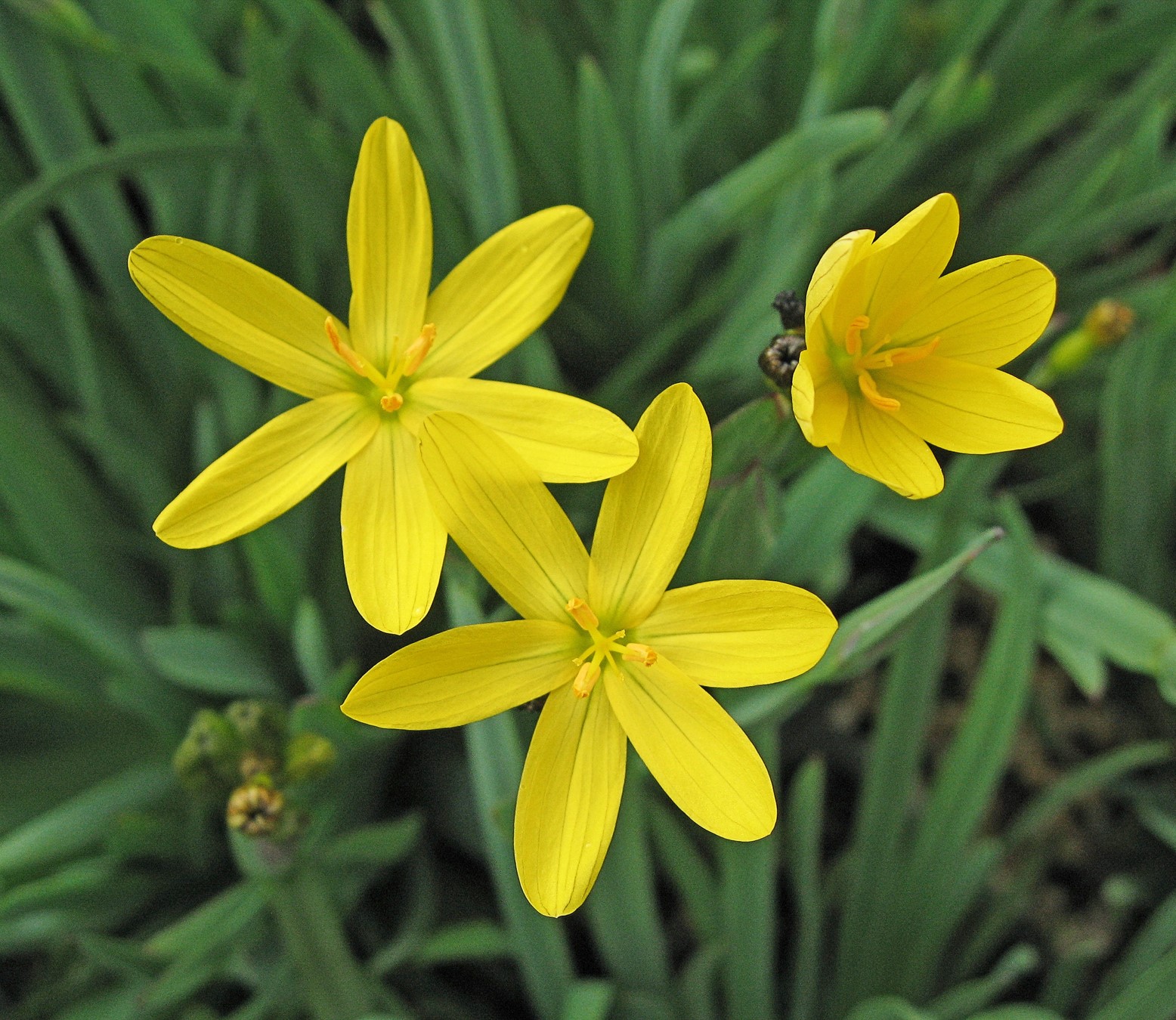
Yellow Eyed Grass (Sisyrinchium californicum) is a perennial herb that naturally grows in moist environments. It is a member of the Iris family, with blade-like leaves. Yellow star-shaped flowers appear from May through June. It forms small clumps and self-sows in favorable conditions, and does best in full sun with regular watering.
Yellow Eyed Grass is adaptable to many types of soil. On the coast it takes full sun and inland grows in part shade. Yellow Eyed Grass is great for moist meadow gardens, rain gardens, in containers, or borders with adequate irrigation.
Perennial herb, Geophyte
8 - 12 in Tall
6 in Wide

Yellow
Containers, Deer resistant, Lawn alternative
Full Sun, Partial Shade
Moderate
Max 1x / week once established
Easy
Tolerates cold to 30° F
Fast, Medium, Slow
Tolerates sandy or clay soils.
Tolerates sodic soil..
Soil PH: 5.0 - 8.0
By seed
4*, 5*, 6*, 7*, 8, 9, 14*, 15*, 16*, 17*, 18*, 19*, 20*, 21*, 22*, 23*, 24*
Moist places primarily along the coast
Freshwater Marsh, Wetland-Riparian
Glossyleaf Manzanita (Arctostaphylos nummularia), Thrift Seapink (Armeria maritima), Ceanothus species, Giant Chinquapin (Chrysolepis chrysophylla), Yerba Buena (Clinopodium douglasii), Woodland Strawberry (Fragraria vesca), Gowen Cypress (Hesperocyparis goveniana), Monterey Cypress (Hesperocyparis macrocarpa), Alumroot (Heuchera spp.), Twinberry (Lonicera involucrata), Lodgepole Pine (Pinus contorta), Bishop Pine (Pinus muricata), Monterey Pine (Pinus radiata), Western Hemlock (Tsuga heterophylla), and California Huckleberry (Vaccinium ovatum).