

Carried by 36 nurseries
View Availability at NurseryData provided by the participants of the Consortium of California Herbaria
View additional distribution information on the Jepson eflora
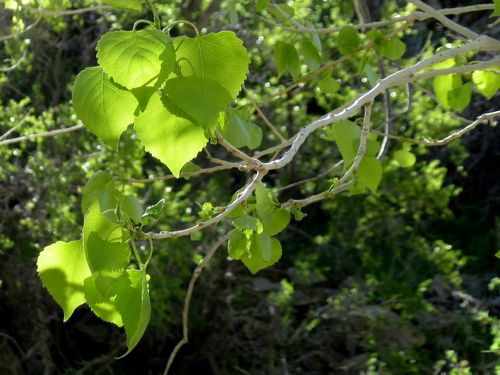
Fremont cottonwood (Populus fremontii) is a fast-growing native shade tree found in alluvial bottomlands and along streamsides at elevations from 0 to 6,500 feet. It thrives in moist soils with plenty of sunlight and is known for its striking, heart-shaped leaves that shimmer in the wind.
This tree is tough and easy to grow, reaching up to 100 feet tall and 35 feet wide when well-watered. It can grow 10–20 feet in a single year, making it ideal for large spaces but unsuitable for small gardens. Due to its invasive roots, it should not be planted near lawns or structures.
Often, only male trees are sold to avoid the "cotton" produced by female trees. Fremont cottonwood is ecologically important, providing habitat and food for birds and butterflies.
Tree
39 - 115 ft Tall
35 ft Wide
Upright Columnar
Fast
Winter Deciduous
None

Cream, White
Spring, Winter
Full Sun
Moderate, High
Keep moist
Easy
Tolerates cold to 5° F
Fast, Medium, Slow
Accepts either sandy or clay soil as long as there is sufficient water.
Tolerates saline soil..
Soil PH: 6.0 - 8.0
Easily propagated from stem cuttings. For propagating by seed: No treatment. Use fresh seeds, usually viable only a few days. Seeds should not be covered or pressed into medium; seedbed should be kept saturated for first month.
Almost always found in riparian or other wetland habitats such as alluvial bottom lands, streamsides, and seeps throughout the state, up to 6500 feet. Usually grows adjacent to chaparral, valley grassland, or any of several types of woodland vegetation communities. In desert riparian areas, it occurs adjacent to creosote bush scrub or desert transition chaparral.
Chaparral, Creosote Bush Scrub, Foothill Woodland
Moisture-loving plants such as Yellow Monkeyflower (Erythranthe guttata), Yerba Mansa (Anemopsis californica), Wild Rose (Rosa californica), and Hedge Nettle (Stachys bullata).
Butterflies and moths supported
5 confirmed and 134 likely
Viceroy
Limenitis archippus
Western Tent Caterpillar
Malacosoma californica
Western Poplar Sphinx Moth
Pachysphinx occidentalis