

Carried by 30 nurseries
View Availability at NurseryData provided by the participants of the Consortium of California Herbaria
View additional distribution information on the Jepson eflora
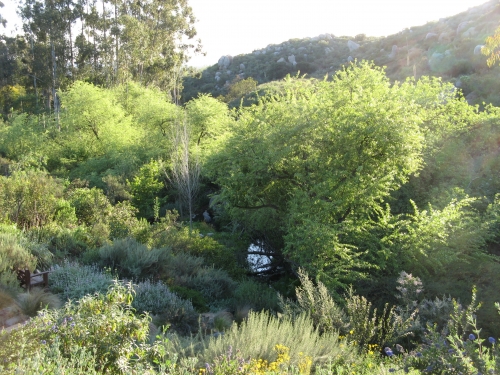
Red willow (Salix laevigata) is a fast-growing native tree commonly found along creeks and wetlands throughout California, from sea level to 5,000 feet. It thrives in consistently moist areas and is often used for erosion control, restoration projects, and bioswales.
This mostly deciduous tree has flexible reddish twigs, shiny green leaves with pale undersides, and yellow catkins in spring. Female trees produce cottony seeds that are dispersed by wind. Its variable form includes multiple twisting trunks that often sprawl along creek beds before growing upright.
Red willow is an important habitat tree, providing food for butterflies like the Western tiger swallowtail, mourning cloak, Lorquin’s admiral, and hairstreaks. While not typically used in residential gardens, it is an excellent choice for wetland landscapes
Tree
30 - 50 ft Tall
30 - 50 ft Wide
Rounded, Spreading
Fast
Winter Deciduous, Winter Semi-deciduous
Slight

Red, Yellow, Cream
Spring, Winter
Full Sun, Partial Shade
High
Max 1x / week once established
Easy
Tolerates cold to -20 - 10° F
Fast, Medium, Slow, Standing
Heavy, moist soils.
Soil PH: 6 - 8
Tolerates heavy pruning. Can often be cut back to the ground and will quickly resprout.
For propagating by seed: No treatment. Use fresh seeds (usually only viable a few days). Seeds should not be covered or pressed into a medium. Seedbed should be kept saturated for the first month. Easily propagated from cuttings.
Creeks or damp areas
Chaparral, Foothill Woodland, Valley Grassland, Yellow Pine Forest, Wetland-Riparian
Western Sycamore (Platanus racemosa), Arroyo Willow (Salix lasiolepis), Black Willow, Sandbar WIllow, Coast Live Oak (Quercus agrifolia var. agrifolia), Yerba Mansa (Anemopsis californica)
Butterflies and moths supported
2 confirmed and 216 likely