

Carried by 12 nurseries
View Availability at NurseryData provided by the participants of the Consortium of California Herbaria
View additional distribution information on the Jepson eflora
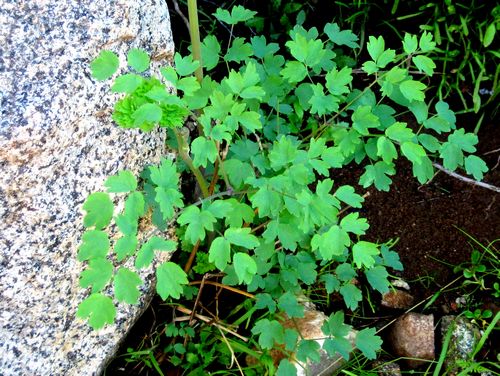
Meadow Rue is a native perennial herb in the Ranunculaceae (Buttercup) family. However, it looks nothing like the conventional image of a Buttercup. It is widespread in Western North America. In California it is found in many locations including the Bay Area, central coast, Coast Ranges, Sierras, and coastal Southern California. It is found from sea level to 10,500 ft., most often in moist forest or woodland areas. It is a shade lover and works well with ferns and other shade plants. In warmer or drier areas it may go dormant in summer and die back to the ground, as some ferns do, but should recover with normal watering.
Perennial herb
3 - 6 ft Tall
1 ft Wide
Upright
Moderate
Summer Semi-deciduous

Yellow
Spring, Summer
Deer resistant
Deep Shade, Partial Shade
Low
Max 1x / month once established
Moderate
Tolerates cold to -20° F
Medium, Slow
Prefers loamy soil with organic matter.
Soil PH: 5.0 - 8.0
Meadows, moist areas, wet rocky walls, openings in forest or woodland
Lodgepole Forest, Red Fir Forest, Subalpine Forest, Yellow Pine Forest
Trees: Red Fir (Abies magnifica), other Abies spp. and Pseudotsuga spp., Lodgepole Pine (Pinus contorta), Yellow Pine (Pinus ponderosa), other Pinus spp., Quaking Aspen (Populus tremuloides), Maple (Acer spp.), Incense Cedar (Calocedrus decurrens), Giant Chinquapin (Chrysolepis chrysophylla), Dogwood (Cornus spp.), Oak (Quercus spp. and Notholithocarpus spp.), and Redwoods (Sequoia sempervirens and Sequoiadendron giganteum)
Other plants: Ferns (Adiantum spp., Asplenium spp., Athyrium spp., Blechnum spicant, Dryopteris spp., Pellaea spp., Pentagramma spp., Polypodium spp., Polystichum spp., Woodwardia fimbriata), Wild Ginger (Asarum caudatum), and Trillium spp.
Butterflies and moths supported
0 confirmed and 5 likely
Common Eupithacia
Eupithecia miserulata
Satyr Pug
Eupithecia satyrata
Speckled Arches
Lacanobia subjuncta
Hitched Arches
Melanchra adjuncta