

Carried by 2 nurseries
View Availability at NurseryData provided by the participants of the Consortium of California Herbaria
View additional distribution information on the Jepson eflora
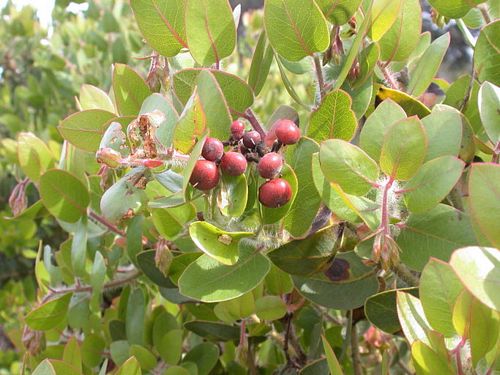
Arctostaphylos catalinae, the Santa Catalina Island manzanita, is a species in the Ericaceae (Heath) family. It is endemic to California, where it grows wild only in the Channel Islands, specifically, Catalina and Santa Cruz Islands. This is a tall, bristly manzanita with a well defined trunk that is adapted to the stiff, saline breezes of the island bluffs in its habitat. It does not develop a basal burl and so does not sprout from the base after a fire. However, like other Manzanitas, the seeds germinate readily after fire. It is an attractive Manzanita that deserves to be used more often in coastal gardens.
Shrub
7 - 16 ft Tall
Evergreen

Pink, White
Winter, Spring
Containers
Full Sun
Very Low
Moderate
Fast, Medium, Slow
Adaptable.
Volcanic outcrops, ridges in proximity to the ocean
Chaparral
Island companion plants include Santa Cruz Island Ironwood (Lyonothamnus floribundus ssp. asplenifolius), Island Live Oak (Quercus tometella), Tree Poppy (Dendromecon harfordii), Island Bristleweed (Hazardia detonsa), Redflower Buckwheat (Eriogonum grande var. rubescens), Catalina Cherry (Prunus ilicifolia ssp. lyonii), and Giant Coreopsis (Leptosyne gigantea). Other chaparral and sage scrub companions include California Encelia (Encelia californica), California Sagebrush (Artemisia californica), Bladderpod (Peritoma arborea), and Ceanothus spp.
Butterflies and moths supported
0 confirmed and 12 likely
Orange Tortrix Moth
Argyrotaenia franciscana