

Carried by 12 nurseries
View Availability at NurseryData provided by the participants of the Consortium of California Herbaria
View additional distribution information on the Jepson eflora
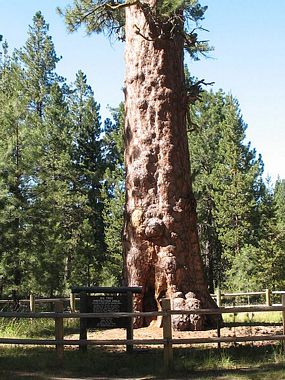
Pinus ponderosa, commonly known as the Ponderosa Pine, Bull Pine, Blackjack Pine, or Western Yellow Pine, is a widespread and variable pine native to western North America. It was first described by David Douglas in 1826, from eastern Washington near present-day Spokane. It is a dominant tree in the Kuchler plant association Ponderosa shrub forest. Like most western pines, the ponderosa is associated with mountainous topography. It is found on the Black Hills and on foothills and mid-height peaks of the northern, central and southern Rocky Mountains as well as the Cascades and Sierra Nevada. Modern forestry research identifies four different taxa of Ponderosa Pine, with differing botanical characters and adapted to different climatic conditions. These have been termed "geographic races" in forestry literature, while some botanists historically treated them as distinct species. In modern botanical usage, they best match the rank of subspecies, but not all of the relevant botanical combinations have been formally published.
Tree
40 - 223 ft Tall
7 ft Wide
Rounded, Upright Columnar
Fast, Moderate
Evergreen
Pleasant

Yellow
Spring
Deer resistant
Partial Shade
Low, Very Low
Max 1x / month once established
Easy
Tolerates cold to -10° F
Fast, Medium, Slow
Prefers sandy or loamy soils. Does not grow well in clay soils.
Soil PH: 5 - 7
For propagating by seed: Fresh seeds need no treatment; stored seeds 1-2 mos. stratification ( USDA Forest Service 1974).
1, 2*, 3*, 4*, 5*, 6*, 7*, 8, 9, 14*, 15*, 16*, 17, 18*, 19
In pure stands or in mixed-conifer forests in the mountains, mainly in inland and drier areas.
Yellow Pine Forest
Buck Brush (Ceanothus cuneatus), sagebrush (Artemesia), oaks, snowberry (Symphoricarpos albus), bushy bluestem (Andropogon glomeratus), Rocky Mountain fescue (Festuca saximontana).
Butterflies and moths supported
23 confirmed and 83 likely
Common Gray
Anavitrinella pampinaria
Western Pine Elfin
Callophrys eryphon
Red Girdle Moth
Caripeta aequaliaria