

Carried by 9 nurseries
View Availability at NurseryData provided by the participants of the Consortium of California Herbaria
View additional distribution information on the Jepson eflora
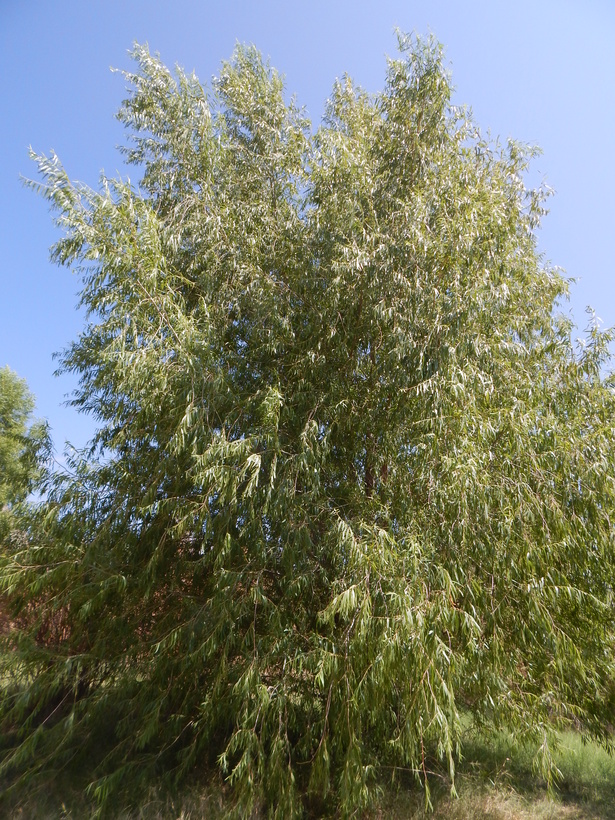
Goodding's Black Willow (Salix gooddingii) is a common native tree that grows throughout the state in wetland areas. It has a moderate growth rate and is moderately long-lived. It grows in an upright form to a height of 15-40 feet, with active growth during the spring and summer. Flowers are green and bloom in the early spring. Leaves are medium green and deciduous. It tends to grow in streamsides, at elevations from sea level to 2,000 feet. It performs in a wide variety of locations, from the south coast to the central valley and perennial streams in desert areas. It tolerates some alkalinity and salinity as well as generally poor water quality. Due to its size and water requirements, this is not a common garden tree but is useful in restoration projects, bioswales, and other constructed wetlands. Like other willows it is an important wildlife plant.
Tree
15 - 40 ft Tall
25 ft Wide
Upright
Moderate, Fast
Winter Deciduous

Green
Spring, Winter
Water features or wet habitats
Full Sun
High
Keep moist
Tolerates cold to 10° F
Slow, Standing
Tolerates a variety of soils as long as adequate moisture is present.
Tolerates sodic soil..
Soil PH: 5.0 - 8.0
For propagating by seed: No treatment. Use fresh seeds (usually only viable a few days). Seeds should not be covered or pressed into a medium. Seedbed should be kept saturated for the first month. Easily propogated from cuttings.
5, 6, 7*, 8*, 9*, 10, 11, 12*, 13*, 14*, 15, 16, 17, 18*, 19*, 20*, 21*, 22*, 23*, 24*
Streamsides, marshes, seepage places, washes, meadows
Coastal Sage Scrub, Creosote Bush Scrub, Foothill Woodland, Valley Grassland, Wetland-Riparian
Use with other wetland-riparian plants appropriate to the planting locations, including Maple (Acer spp.), Alder (Alnus spp.), Ash (Fraxinus spp.), Cottonwood (Populus spp.), Sycamore (Platanus racemosa), Mulefat (Baccharis salicifolia), Dogwood (Cornus spp.), Honeysuckle (Lonicera spp.), Currant/Gooseberry (Ribes spp.), wild rose (Rosa spp.), Blackberry (Rubus spp.), and wild grape (Vitis californica or girdiana)
Butterflies and moths supported
0 confirmed and 177 likely