

Carried by 68 nurseries
View Availability at NurseryData provided by the participants of the Consortium of California Herbaria
View additional distribution information on the Jepson eflora
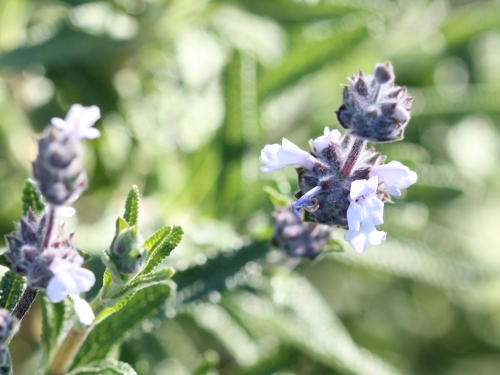
Black sage is the most common sage in California. Though less showy than other salvia species and cultivars, it is an important food source for bees, butterflies, and hummingbirds. The flowers are small and pale blue-lavender in color. After blooming, black sage seeds provide food for birds, including quail and towhees.
A black sage shrub can grow up to 6 feet tall and 10 feet wide. In the garden, this aromatic plant prefers full sun and well-draining soil. It is a low-moisture plant, requiring no supplemental water once established. It is usual for the small, dark green leaves to curl during summer drought.
Shrub
3 - 6 ft Tall
3 - 10 ft Wide
Mounding
Moderate
Evergreen, Summer Deciduous, Summer Semi-deciduous
Pleasant

Blue, Lavender, White
Summer, Spring, Winter
Bank stabilization, Groundcover, Hedge
Full Sun
Extremely Low, Very Low
Max 1x / month once established, Never irrigate once established
Easy
Tolerates cold to 30° F
Fast, Medium
Tolerates a variety of soils although it is happier with good drainage.
Tolerates gabbro soil.,Tolerates serpentine soil..
Soil PH: 4.0 - 8.0
For propagating by seed: No treatment; sow outdoors in early fall. Germination may be poor. The following alternative treatments may improve germination: stratify 3 mos. or soak in 400 ppm GA3 1 hr., then dry and sow (Betty Atwater, personal communication 1981).
7*, 8, 9, 14*, 15*, 16*, 17*, 18, 19*, 20*, 21*, 22*, 23*, 24*
Flats, mesas, foothills, canyons, shallow slopes, and slope bottoms as part of coastal sage scrub and chaparral
Chaparral, Coastal Sage Scrub
Laurel Sumac (Malosma laurina), Lemonade Berry (Rhus integrifolia), Coast Live Oak (Quercus agrifolia), Scrub Oak (Quercus berberidifolia), Woolly Bluecurls (Trichostema lanatum), Climbing Penstemon (Keckiella cordifolia), California Encelia (Encelia californica), California Buckwheat (Eriogonum fasciculatum), Coast Sagebrush (Artemisia californica), California Adolphia (Adolphia californica), Diplacus puniceus, Chaparral Bush Mallow, White Coast Ceanothus (Ceanothus verrucosus) Hollyleaf Redberry (Rhamnus spp.), Manzanita (Arctostaphylos spp.), Yucca species, Dudleya species and cactus species
Butterflies and moths supported
4 confirmed and 8 likely
California Pyrausta Moth
Pyrausta californicalis
Volupial Pyrausta Moth
Pyrausta volupialis
Gray Hairstreak
Strymon melinus
Bornstein, C., Fross, D., & O'Brien, B. (2005). California Native Plants for the Garden.