

Carried by 42 nurseries
View Availability at NurseryData provided by the participants of the Consortium of California Herbaria
View additional distribution information on the Jepson eflora
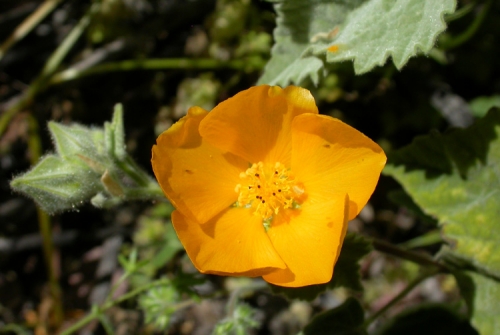
Palmer's Abutilon (Abutilon palmeri) is a relatively rare species of the Malvaceae Family (mallows) native to the southwestern U.S. and northern Mexico. It grows primarily on the eastern slopes of the Peninsular Range and the Western Sonora Desert, and in San Bernardino County in the low foothills of the San Bernardino Mountains (1080-3600 feet).
Flowers are cup-shaped, approximately one inch in size. They produce small fruits which are round, capsular, multi-parted and covered with silky fine hair similar to foliage. Branches and stems are also hairy, with a red-brown coloring to the twigs. Bark ranges from green to brown.
Palmer's Abutilon is tough and easy to grow. For best results, plant in rocky or sandy well-draining soil. It tolerates occasional light summer watering.
Shrub
3 - 8 ft Tall
3 - 5 ft Wide
Rounded
Fast
Evergreen
None, Slight

Orange, Yellow
Spring
Containers
Full Sun
Low, Moderate
Max 1x / month once established
Easy
Tolerates cold to 25° F
Fast
Dry rocky, well draining soil.
Soil PH: 6 - 8
Deadhead if a neater appearance is desired. Tip prune to encourage more compact growth and flowering.
Seeds. For propagating by seed: No treatment.
Dry slopes and canyons of the Peninsular Range, often east-facing, in conjunction with desert transition chaparral and creosote bush scrub
Creosote Bush Scrub
Trees - Palo Verde (Parkinsonia spp.), Ironwood (Olneya tesota), Smoketree (Psorothamnus spinosus), California Fan Palm (Washingtonia filifera)
Other plants - Creosote Bush (Larrea tridentata), Desert Lavender (Condea emoryi), Desert Agave (Agave deserti), Ocotillo (Fouquieria splendens), Brittlebush (Encelia farinosa), Desert Scrub Oak (Quercus cornelius-mulleri), Yucca species, various cactus species
Butterflies and moths supported
0 confirmed and 8 likely
Chalky Bird-dropping Moth
Acontia cretata
Sandstorm Tumbler
Bagisara buxea
Tobacco Budworm Moth
Chloridea virescens
Corn Earworm Moth
Helicoverpa zea