

Carried by 7 nurseries
View Availability at NurseryData provided by the participants of the Consortium of California Herbaria
View additional distribution information on the Jepson eflora
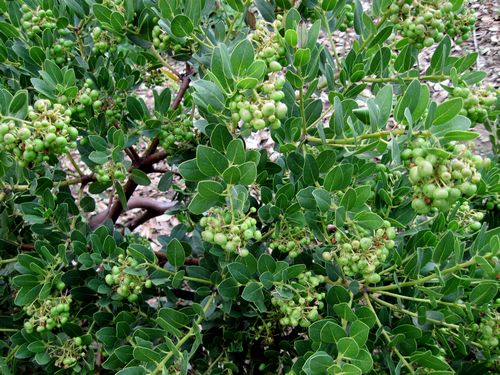
Arctostaphylos insularis is a species of manzanita known by the common name island manzanita. It is endemic to Santa Cruz Island, one of the Channel Islands of California. It grows in chaparral and woodland. This is a large, spreading shrub ordinarily reaching over two meters tall and known to exceed five meters in height. It has waxy, reddish bark and the smaller twigs sometimes have bristly hairy hairs. The leaves are shiny green and smooth, generally oval in shape and slightly convex, and up to about 4.5 centimeters long. The shrub blooms in many dense clustered flower clusters of urn-shaped flowers. The fruit is an orange-brown drupe up to 1.5 centimeters wide. Its long bloom time makes it a good choice for the coastal southern California garden where it will get some moisture from fog drip.
Shrub
7 - 16 ft Tall
10 ft Wide
Mounding
Moderate, Slow
Evergreen
Slight

Pink, White, Orange, Brown
Winter, Spring
Hedge
Partial Shade, Full Sun
Low, Very Low
Max 1x / month once established
Moderate
Tolerates cold to -5° F
Fast, Medium, Slow
Tolerant of sand and clay.
Soil PH: 6.0 - 8.0
By seeds or cuttings
15, 16, 17, 18, 19, 20, 21, 22, 23, 24
Rocky slopes and coastal bluffs of the northern Channel Islands
Yellow Pine Forest
Island companions include Island Ironwood (Lyonothamnus fasciculatus ssp. asplenifolius), Catalina Cherry (Prunus ilicifolia ssp. lyonii), St. Catherine's Lace (Eriogonum giganteum), Island Buckwheat (Eriogonum arborescens), Island Morning Glory (Calystegia macrostegia), Island Ceanothus (Ceanothus arboreus), Channel Islands Tree Poppy (Dendromecon hardordii), Island Alum Root (Heuchera maxima), Island Mallow (Lavatera assurgentiflora), Island Pitcher Sage (Lepechinia fragrans), Island Oak (Quercus tomentella), Catalina Island Gooseberry (Ribes virburnifolium), and Santa Rosa Island Sage (Salvia brandegeei)
Butterflies and moths supported
3 confirmed and 11 likely
Western Avocado Leafroller Moth
Amorbia cuneana
Orange Tortrix Moth
Argyrotaenia franciscana