

Carried by 64 nurseries
View Availability at NurseryData provided by the participants of the Consortium of California Herbaria
View additional distribution information on the Jepson eflora
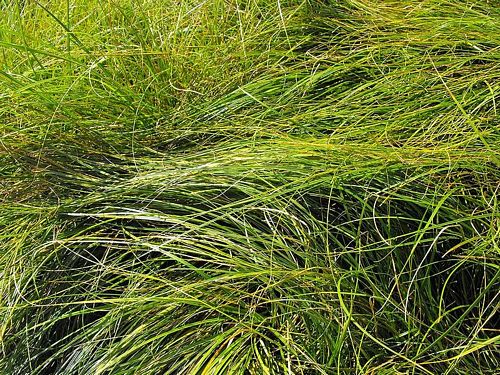
Clustered field sedge (Carex praegracilis) is a tough, adaptable species in the sedge family (Cyperaceae), native to much of North America, except for the southeastern region. It thrives in wet and seasonally wet environments, including meadows, riverbanks, and wetlands, and can even grow in clay hardpan soils.
This sedge spreads readily by underground rhizomes, making it useful for erosion control on slopes. It also serves as an excellent lawn alternative, requiring significantly less water than traditional turfgrass. It can be mowed, tolerates moderate foot traffic, and works well in poorly draining areas or between pavers.
Grass
2 - 4 ft Tall
4 ft Wide
Upright, Mounding
Moderate
Evergreen

Green
Spring
Containers, Deer resistant, Groundcover, Lawn alternative
Full Sun
Moderate
Max 1x / month once established
Easy
Tolerates cold to -5° F
Fast, Medium, Slow
Tolerant of a variety of soils as long as sufficient moisture is provided.
Tolerates saline soil.,Tolerates sodic soil..
Soil PH: 6.0 - 7.0
Can be mowed to the ground to create a lawn-like appearance; it is a useful lawn substitute. Mowing every 4 to 6 weeks encourages production of side shoots from the base of stems.
Propogate by bare root divisions.
Moist and semi-moist areas such as meadows, seeps, stream banks and lake/pond shoreline
Coastal Sage Scrub, Coastal Strand, Creosote Bush Scrub, Red Fir Forest, Valley Grassland, Yellow Pine Forest, Wetland-Riparian
Can be used with other plants of moist or semi-moist areas, including Marsh Elder (Iva hayesiana), Alkali Heath (Frankenia salina), Cardinal Monkeyflower (Erythranthe cardinalis), Scarlet Lobelia (Lobelia cardinalis), Yerba Santa (Anemopsis californica), Blue-eyed Grass (Sisyrinchium bellum), Marsh Fleabane (Pluchea odorata), Iris spp., Dwarf Juniper (Juniperus communis), Deer Grass (Muhlenbergia spp.), Strawberry (Fragaria spp.), and Rushes (Juncus spp.)
Butterflies and moths supported
0 confirmed and 9 likely
American Ear Moth
Amphipoea americana
Common Ringlet
Coenonympha tullia
Olive Green Cutworm Moth
Dargida procinctus