

Carried by 60 nurseries
View Availability at NurseryData provided by the participants of the Consortium of California Herbaria
View additional distribution information on the Jepson eflora
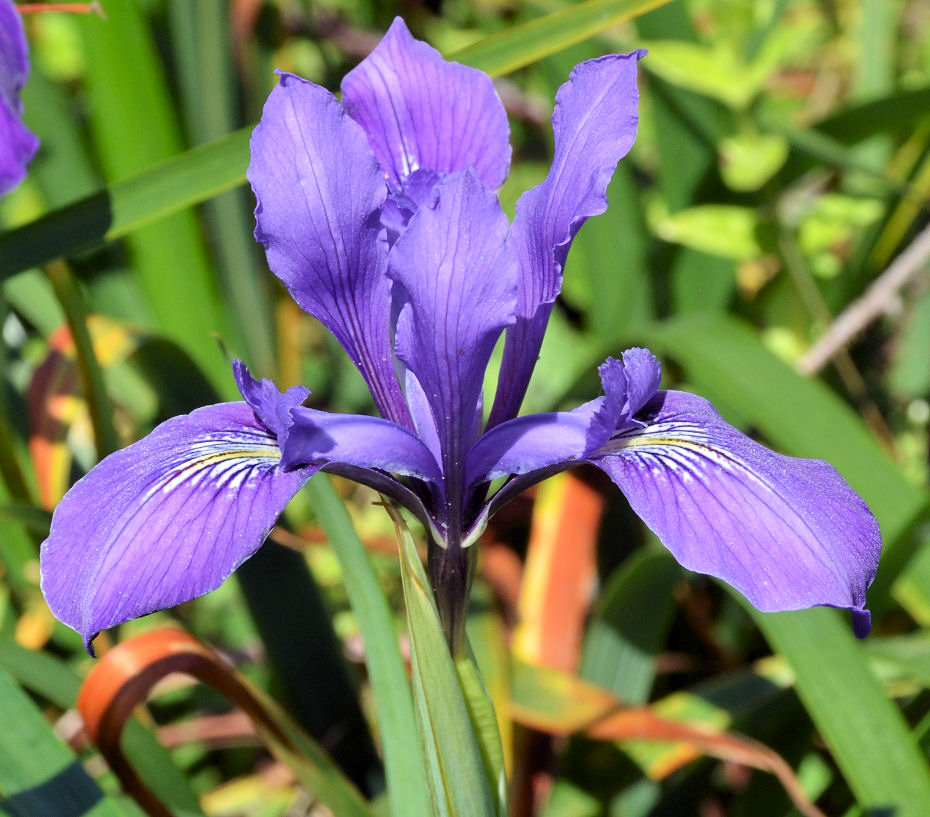
The Douglas Iris (Iris douglasiana) is a common and attractive wildflower of the coastal regions of Northern and Central California and Southern Oregon, with scattered locations inland. The Douglas Iris grows mainly at lower elevations, below 330 feet, though it is occasionally found at heights of up to 3,300 feet.
It is most common in grasslands near the coast; it is regarded as a noxious weed in pastures, because it forms clumps that inhibit other vegetation, and its leaves are bitter and unpalatable to cattle.
Douglas Iris prefers part or full shade and richer soils and is fast growing near the coast. If not planted next to a creek or in a naturally wet area, it likes summer water every 2 to 4 weeks. It is more drought tolerant near the coast where it benefits from cooler temperatures and fog. The flowers can be highly variable in color, and many cultivars are available.
Plant type
Perennial herb, Geophyte
Size
7 - 31 in Tall
2 - 4 ft Wide
Form
Fountain
Growth rate
Fast, Moderate
Dormancy
Evergreen
Fragrance
None

Color
Blue, Pink, Purple, White, Yellow
Flowering season
Winter, Spring
Special uses
Containers, Deer resistant, Groundcover, Lawn alternative
Sun
Full Sun, Partial Shade, Deep Shade
Water
Low, Moderate
Summer irrigation
Max 1x / month once established
Ease of care
Easy
Cold tolerance
Tolerates cold to 30° F
Soil drainage
Slow
Soil description
Prefers heavy soils with organic matter.
Tolerates serpentine soil..
Soil PH: 5.0 - 8.0
Maintenance
Can be deadheaded
Propagation
Will self-sow and will hybridize if you have more than one variety. Readily forms large clumps. To propagate a selected variety, divide clump after blooming is finished. The best time to divide is in winter when new growth starts at the base of the plant. (See photo.) For propagating by seed: No treatment. Sow in early fall outdoors.
Sunset Zones
4*, 5*, 6*, 7, 8, 9, 14*, 15, 16*, 17*, 18*, 19*, 20*, 21*, 22*, 23*, 24
Site type
Grassy places, meadows, coastal prairie and in the understory of evergreen forest from Del Norte County to Santa Barbara County and scattered inland locations
Plant communities
Closed-cone Pine Forest, Coastal Prairie, Coastal Sage Scrub, Mixed Evergreen Forest
Use with other plants that prefer rich, heavy soils and more moisture such as rushes (Juncus spp.), spikerush (Eleocharis spp.), sedges (Carex spp.), California fuschia (Epilobium canum), Western Columbine (Aquilegia formosa), lilies, California Grape (Vitis californica), Wild Rose (Rosa californica), ferns, and trees such as Sycamore (Platanus racemosa), Bigleaf Maple (Acer macrophyllum), or willows (Salix spp.).
Butterflies and moths supported
0 confirmed and 2 likely
Confirmed
Likely
American Ear Moth
Amphipoea americana
Verbena Bud Moth
Endothenia hebesana
Common names:
Visit About Us for general information about our data sources and terms of use.