

Carried by 11 nurseries
View Availability at NurseryData provided by the participants of the Consortium of California Herbaria
View additional distribution information on the Jepson eflora
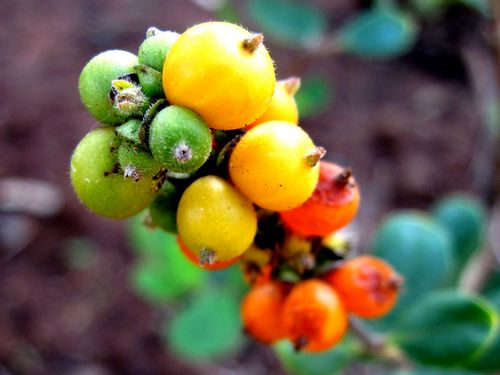
Southern Honeysuckle is a species in the Caprifoliaceae (Honeysuckle) family that is endemic to California, where it is known from several areas in mountain and coastal habitats, particularly chaparral. It is a vining shrub that usually climbs on other plants for support. It may exceed two meters in length. It is lined with oval leaves up to 4 centimeters long. The flower cluster is a long, fuzzy spike of light yellow flowers each about a centimeter long. The flower has an upper and lower lip with hairy stamens and style protruding. The fruit is a round red or yellow berry just under a centimeter wide. There are two recognized varieties, var. subspicata and var. denudata. There are subtle differences between the two varieties, and they have overlapping ranges (see separate listings). Var. denudata is the more widespread variety.
Shrub
8 ft Tall
20 ft Wide
Spreading
Evergreen
Pleasant

Yellow, Cream
Summer, Spring
Bank stabilization, Deer resistant, Groundcover, Hedge
Full Sun, Partial Shade
Low
Max 2x / month once established
Moderate
Tolerates cold to 5° F
Medium, Slow
Tolerant of a variety of soils including clay and decomposed granite.
Soil PH: 6.0 - 7.5
Do not prune new, young growth because that is where the flowers and fruit are borne. Remove older growth to shape and to stimulate growth of new stems.
Seed or cuttings
Coastal plains, foothills and the west slope of the mountains from the Bay Area southward, typically in the partial shade of oaks or chaparral species
Chaparral, Coastal Sage Scrub
Many companion plants including Manzanita (Arctostaphylos spp.), Ceanothus spp., Coyote Bush (Baccharis pilularis), San Diego Viguiera (Bahiopsis laciniata), Barberry (Berberis spp.), Mountain Mahogany (Cercocarpus betuloides or minutiflorus), Bushrue (Cneoridium dumosum), Summer Holly (Comarostaphylis diversifolia), Tree Poppy (Dendromecon rigida), California Brittlebush (Encelia californica), Goldenbush (Ericameria spp.), Yerba Santa (Eridoctyon spp.), Buckwheat (Eriogonum spp.), Flannelbush (Fremontodendron spp.), Silk Tassel Bush (Garrya spp.), Toyon (Heteromeles arbutifolia), Pitcher Sage (Lepechinia spp.), Bush Mallow (Malacothamnus spp.), Sticky Monkeyflower (Diplacus aurantiacus), Hollyleaf cherry (Prunus ilicifolia), Oaks (Quercus spp.), Lemonade Berry (Rhus integrifolia), wild Currant (Ribes spp.), Sage (Salvia spp.), Woolly Bluecurls (Trichotema lanatum), and Mission Manzanita (Xylococcus bicolor).
Butterflies and moths supported
2 confirmed and 19 likely
Ashy Pleromelloida Moth
Pleromelloida cinerea
Geranium Plume Moth
Amblyptilia pica
Western Avocado Leafroller Moth
Amorbia cuneana