

Carried by 42 nurseries
View Availability at NurseryData provided by the participants of the Consortium of California Herbaria
View additional distribution information on the Jepson eflora
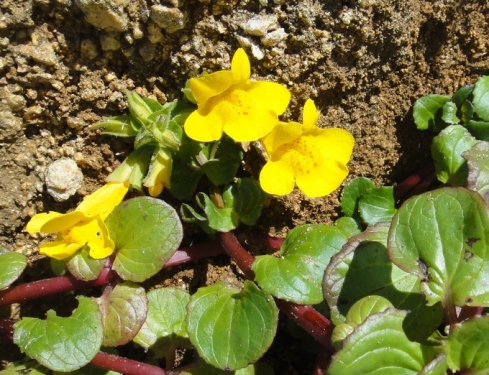
Seep Monkey Flower (Erythranthe guttata syn. Mimulus guttatus) is a perennial wildflower in the Lopseed family (Phrymaceae). As the name suggests, it grows in moist stream banks and seeps. Often it will grow with its roots submerged, and the light green foliage and yellow flowers will float on the surface of the water. Its spreading root systems make it one of the best plants for filtering water in aquatic gardens, and its abundant yellow snapdragon-shaped flowers add spectacular color to a pond in winter and spring. Note that because it aggressively spreads and copiously self seeds, it may need to be periodically pulled or cut back to prevent it from crowding out other plants.
Seep Monkey Flower attracts bees, butterflies and moths. Useful in naturally wet landscapes, such as a moist alpine meadow, along any sort of waterway, and in serpentine soils.
Annual herb, Perennial herb
2 - 5 ft Tall
7 in Wide
Upright
Fast
Winter Deciduous
None

Yellow
Spring, Winter
Water features or wet habitats, Deer resistant
Partial Shade, Full Sun
Moderate, High
Max 1x / week once established
Easy
Tolerates cold to -15° F
Slow, Standing
Tolerates a variety of soils as long as adequate drainage is provided.
Soil PH: 5.0 - 8.0
Deadhead for a better appearance and to prolong blooming, or leave old flowers in place to encourage re-seeding.
Usually self-sows. For propagating by seed: No treatment.
1, 2, 3, 4, 5, 6, 7*, 8*, 9*, 10, 11, 12, 14*, 15, 16, 17, 18*, 19*, 20*, 21*, 22*, 23*, 24
Wet places, terrestrial, emergent or floating in mats
Chaparral, Coastal Strand, Foothill Woodland, Lodgepole Forest, Northern Coastal Scrub, Pinyon-Juniper Woodland, Red Fir Forest, Subalpine Forest, Valley Grassland, Yellow Pine Forest, Wetland-Riparian
Use with other plants that need moist soil such as Scarlet Monkeyflower (Erythranthe cardinalis), Stream Orchid (Epipactis gigantea), Hedge Nettle (Stachys bullata), and various Carex and Juncus species
Butterflies and moths supported
2 confirmed and 8 likely