

Carried by 29 nurseries
View Availability at NurseryData provided by the participants of the Consortium of California Herbaria
View additional distribution information on the Jepson eflora
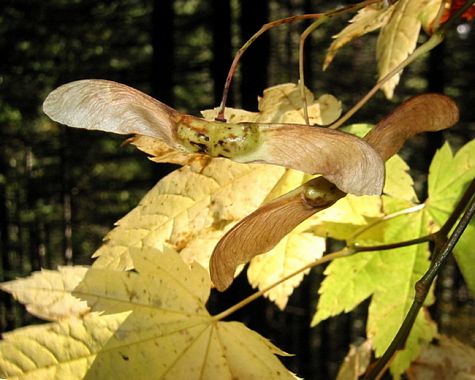
Acer circinatum (Vine Maple) is a species of maple native to western North America, from southwest British Columbia to northern California, usually within 300 km of the Pacific Ocean coast. It most commonly grows as a large shrub growing to around 5-8 meters tall, but it will occasionally form a small to medium-sized tree, exceptionally to 18 meters tall. The shoots are slender and hairless. It typically grows in the understory below much taller forest trees, but can sometimes be found in open ground, and occurs at altitudes from sea level up to 1,500 meter.
Tree
15 - 30 ft Tall
3 - 6 ft Wide
Upright
Moderate, Slow
Winter Deciduous

Green, Red, Yellow
Spring
Deer resistant
Deep Shade, Partial Shade
High, Moderate
Never irrigate once established
Easy
Tolerates cold to 0 - 20° F
Fast, Medium, Slow
Fine with many types of soil as long as well draining.
Soil PH: 5.5 - 7.5
May be pruned to keep as a dwarf tree, or even as a bonzai.
For propagating by seed: Scarification, 1-2 mos. warm, and 3-6 mos. cold stratification; when periodic checks during cold stratification indicate incipient germination, the whole lot should be sown ( USDA Forest Service 1974). Use fresh seeds.
1, 2, 3, 4*, 5*, 6*, 7*, 8, 9, 14*, 15*, 16*, 17*, 18, 19, 20
Stream banks, forest understories, canyon bottoms
Mixed Evergreen Forest, Forest, Yellow Pine Forest, Wetland-Riparian
Douglas fir (Pseudotsuga menziesii), Rocky Mountain Maple (Acer glabrum). Western hemlock (Tsuga heterophylla), Western Red Cedar (Thuja plicata), Sitka Spruce (Picea sitchensis), Service Berry (Amelanchier utahensis), Pacific Silver Fir (Abies amabilis), Dwarf Mahonia (Berberis aquifolium var repens), Ponderosa Pine (Pinus ponderosa), Sitka Alder (Alnus viridis ssp. sinuata), Red Elderberry (Sambucus racemosa), Oceanspray (Holodiscus discolor), Pacific Rhododendron (Rhododendron macrophyllum)
Butterflies and moths supported
10 confirmed and 55 likely
Polyphemus moth
Antheraea polyphemus
Elegant Sheepmoth
Hemileuca eglanterina
Hemlock Looper
Lambdina fiscellaria