

Carried by 13 nurseries
View Availability at NurseryData provided by the participants of the Consortium of California Herbaria
View additional distribution information on the Jepson eflora
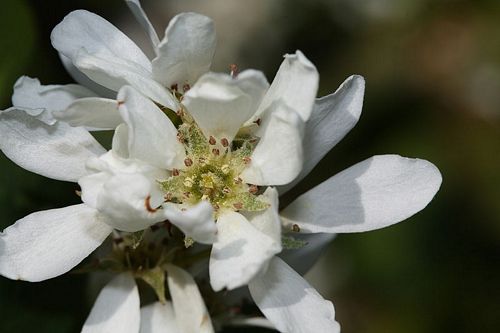
Western Serviceberry (Amelanchier alnifolia) is a beautiful shrub that grows primarily in Northern California and the Sierra mountains. Western Serviceberry has year-round interest, with showy apple-like white flowers that appear in spring, edible blueberry-tasting fruits in the summer, fall color foliage, and bare branches in the winter.
Western Serviceberry typically is a rounded shrubby form, though it can grow more upright, especially in shady areas. It can be pruned for either a flatter or more rounded, open spreading shape.
Western Serviceberry is fairly easy to grow in soil with excellent drainage, though it prefers loam or sandy loam. In its natural range, at higher elevations, it prefers full sun, needing little or no watering in summer, and is fast growing and long lived - reaching 6 feet in 3 to 6 years and lasting about 60 years. Outside its natural range, it prefers part shade and regular irrigation, and can be slow growing and short lived.
Western Serviceberry is an important food source for birds and animals, and is still grown commercially for human consumption.
Shrub
15 - 35 ft Tall
15 - 20 ft Wide
Upright, Rounded
Fast, Moderate
Winter Deciduous

White
Summer
Hedge
Full Sun, Partial Shade
Moderate
Max 1x / month once established
Easy
Tolerates cold to -25 - 60° F
Fast, Medium
Adaptable, tolerant of sand, loam and clay. Prefers sandy loam or loam soils.
Soil PH: 6 - 7
Prune to an open form in order to increase light and air flow though the plant, and reduce the chances of disease. For the first three years, only remove low branches and dead, or diseased stems. In order to maximize berry production, start regular pruning after the plant reaches about 6 feet tall (3-6 years), and regularly remove older branches.
Easy to propogate, and readily grows nearby seedlings. Seedling will grow about 1 foot per year. For propagating by seed: 4-6 mos. stratification ( USDA Forest Service). 4 mos. warm then 4 mos. cold stratification (Heit 1971) may improve germination.
Relatively dry open places, slightly moist hillsides, near streams or lakes
Forest
Red Flowering Currant (Ribes sanguineum), Coffee Berry (Frangula californica), Pinemat Manzanita (Arctostaphylos nevadensis), Redbud (Cercis occidentalis), Common Manzanita (Arctostaphylos manzanita), Sulphur Buckwheat (Eriogonum umbellatum), Mountain Mahogany (Cercocarpus betuloides), Madrone (Arbutus menziesii), Oregon Grape (Berberis aquifolium)
Butterflies and moths supported
2 confirmed and 53 likely
Ceanothus Silkmoth
Hyalophora euryalus
California Hairstreak
Satyrium californica
Climbing Cutworm
Abagrotis orbis